Lithuania’s gambling checks may test a wider Baltic border risk
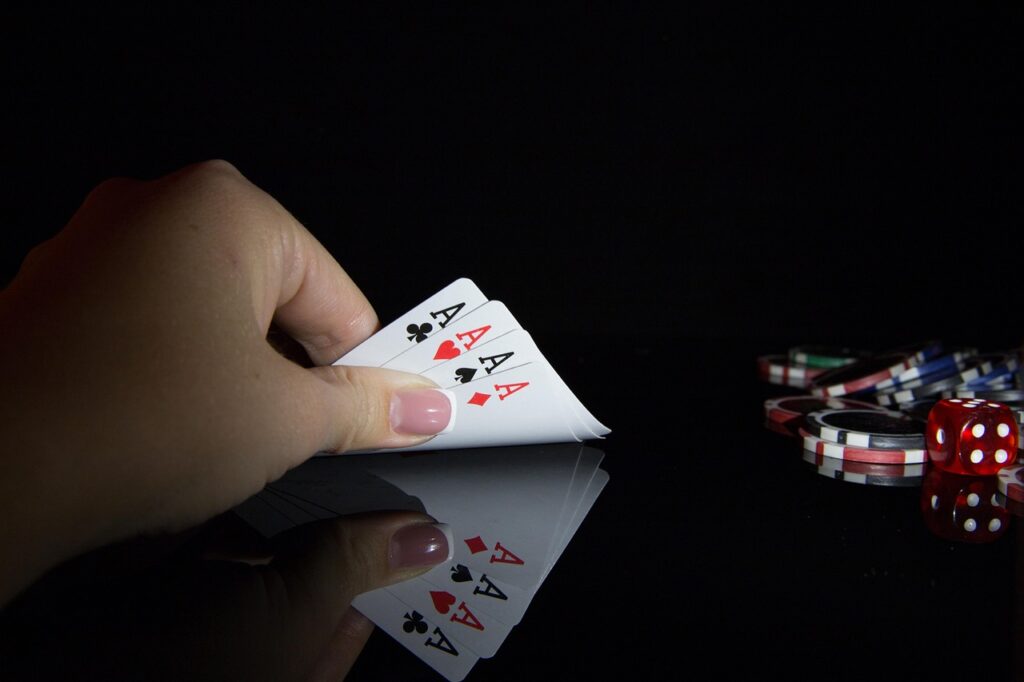
Lithuania is preparing to tighten gambling regulation at a moment when gambling is becoming part of a broader household-finance and regional-market question.
The Finance Ministry plans to submit amendments to the Gambling Law during the Seimas spring session. Under the current proposal, gambling operators would have to assess a player’s income and financial capacity if the player chooses a monthly possible-loss limit above €1,000. Without supporting documents, the person would not be allowed to gamble.
The proposal also includes mandatory use of a player card in both physical gambling venues and online, as well as broader blocking powers against illegal gambling websites and sites that advertise or link to them.
Full implementation, however, will not be immediate. The mandatory player-card system and the technical infrastructure needed for stronger control are expected to require a transition period, with the main player-card framework planned for 2029. That creates an implementation gap: Lithuania is already identifying gambling as a financial-risk channel, while the strongest technical tools will only arrive later.
Data card: Lithuania’s gambling market and risk indicators
| Indicator | Latest figure |
|---|---|
| Amount paid into gambling in 2025 | €4.89bn |
| Winnings paid out in 2025 | €4.616bn |
| Gross gambling revenue / player losses in 2025 | €274m |
| Gross gambling revenue in 2024 | €242m |
| Active self-exclusion restrictions by 1 May 2026 | around 21,000 |
| Total self-exclusion applications received | over 91,000 |
| New self-exclusion applications | up to 60 per day / around 1,500 per month |
| Largest age group among applicants | 21–30 |
| Share of men among applicants | 84% |
| Diagnosed pathological gambling patients in 2025 | 139 |
The official argument is straightforward: Lithuania wants to reduce gambling accessibility, attractiveness and potential harm. But the figures show that the issue is also financial. The market is growing, self-exclusion is used by thousands of people, and the medical system records only a small visible part of the problem.
That gap matters. Gambling harm is more visible through financial behaviour and self-blocking than through medical diagnosis.
From self-exclusion to affordability checks
Lithuania’s proposal marks a possible shift from a passive model to an active financial-control model.
A self-exclusion register works when the player already recognises the problem and asks to be blocked. An affordability check moves the intervention earlier. It asks whether the player’s income and financial position can support the level of loss they are preparing to risk.
That is a different regulatory logic. It treats gambling as a fast-loss financial channel, not only as a health or addiction issue.
The BaltCap / Šarūnas Stepukonis case is part of that background. The European Public Prosecutor’s Office said in 2025 that the former BaltCap Infrastructure Fund partner may have misappropriated more than €42 million, with more than €36 million reportedly lost in casinos in Lithuania and Estonia. The suspected losses included up to €5.1 million in a Lithuanian casino and €31.6 million in an Estonian casino.
The case widened the debate. It showed that gambling infrastructure can absorb not only household money, but also large sums with institutional origins. Lithuania’s Gaming Control Authority later fined Olympic Casino Group Baltija almost €8.4 million after the case.
The BaltCap case does not suggest that a €1,000 monthly affordability threshold would prevent every high-risk gambling case. It points to a different problem: large gambling flows in the Baltics can cross national borders and fall between different regulatory systems. That is why Latvia and Estonia matter in this discussion.
The pension-savings overlap
There is also a timing issue that should be treated carefully: Lithuania’s second-pillar pension reform.
After the liberalisation of the private second-pillar pension system, around 40% of participants — about 580,000 people — opted to withdraw all or part of their savings. The reform followed a law giving savers a two-year window to withdraw from the private second-pillar system.
This reform is not presented by Lithuanian officials as the reason for the gambling proposal. The two processes should not be read as a direct cause-and-effect chain.
But they do overlap in time.
Long-term pension savings are becoming more liquid in the same period when Lithuania is preparing to move from self-exclusion toward affordability-based gambling supervision. That overlap changes the risk environment: some households will have access to money that had previously been locked away for retirement, while the strongest gambling-control tools are expected to require a transition period before full implementation.
The point is not that pension withdrawals caused the gambling reform. The point is that Lithuania is dealing with two household-finance developments at once: more liquid long-term savings and a growing gambling market.
Latvia and Estonia use different tools
The regional question is whether Lithuania’s tougher approach will remain a national issue.
Latvia and Estonia already have gambling safeguards, but their systems are built mainly around self-exclusion and access control, not a public affordability threshold like Lithuania’s proposed €1,000 monthly possible-loss trigger.
In Latvia, the self-exclusion register allows a person to restrict themselves from gambling, including interactive gambling and interactive lotteries. The minimum exclusion period is 12 months from the date the person is entered in the register.
In Estonia, a person can set gambling restrictions through the Tax and Customs Board. The restriction applies to games of chance, sports betting and lotteries. The person chooses a period from 6 to 36 months, after which a separate application is needed to be removed from the list. Licensed operators must not allow a person with a valid restriction to gamble.
Estonia also has a visible tax-and-data supervision structure. The Estonian Tax and Customs Board reported €61 million in gambling tax revenue in 2025, up 7% from 2024. The same annual review said that 20,149 people were in the gambling-restriction register at the end of 2025, compared with 18,780 a year earlier.
The difference is therefore not that Latvia or Estonia lack controls. They do. But Lithuania is moving toward a stronger financial-capacity test.
The alcohol-tourism precedent
The risk of cross-border movement is not theoretical in the Baltic region.
The alcohol precedent is not a direct analogy to gambling. It is a precedent of regulatory arbitrage: when neighbouring Baltic markets apply sharply different tax or regulatory regimes, consumer behaviour can shift across borders.
A sharp difference in alcohol excise policy between Estonia and Latvia previously created a visible flow of Estonian buyers to northern Latvia. Latvian border areas developed retail infrastructure around that demand, including large alcohol stores serving cross-border customers.
In 2017, cross-border alcohol trade with Estonia accounted for 13% of Latvia’s alcohol excise revenue, or about €25.6 million out of €198.09 million, according to ERR’s report based on Latvian State Revenue Service data. Earlier, Latvian media reported that Estonians were travelling to Valka to buy cheaper alcohol after Estonia’s excise increases opened a price gap with Latvia; at the time, alcohol excise in Latvia was about 40% lower than in Estonia.
Gambling is not alcohol. It is less likely to produce the same mass retail tourism. But the policy lesson is similar: when neighbouring Baltic markets apply sharply different rules, consumer behaviour can adjust quickly.
If Lithuania introduces affordability checks while Latvia and Estonia remain mainly within self-exclusion models, a regulatory gap may appear. For ordinary players, this could mean trips to neighbouring casinos or a search for online alternatives. For high-value and problem gambling, the issue is more sensitive: the BaltCap case already showed that large gambling flows in the Baltics can cross national borders.
Baltic gambling markets: not fully comparable, but large enough to matter
The market comparison matters for one practical question: if Lithuanian controls become stricter, are the neighbouring markets large enough to absorb some diverted demand?
The figures are not perfectly comparable because regulators publish different indicators. Lithuania provides total stakes, winnings and gross gambling revenue. Latvia publishes gambling operators’ revenue, broadly comparable to GGR. Estonia’s easily accessible annual summary gives gambling tax revenue rather than full GGR.
| Country | Latest available 2025 indicator | What it shows |
|---|---|---|
| Lithuania | €4.89bn paid into gambling; €4.616bn paid out in winnings; €274m GGR | Large and growing market; GGR up from €242m in 2024 |
| Latvia | €299.579m gambling operators’ revenue | Market size by operator revenue is slightly above Lithuania’s GGR |
| Estonia | €61m gambling tax revenue | Not directly comparable with GGR, but shows a significant regulated market |
Latvia’s regulator reported that gambling operators’ total revenue in 2025 was €299.579 million, almost unchanged from 2024. Lithuania’s gambling GGR reached €274.1 million, with remote gambling revenue at €202.4 million and land-based gambling revenue at €71.7 million. Estonia’s Tax and Customs Board reported €61 million in gambling tax revenue in 2025, including €20.8 million from lotteries, €13 million from land-based casinos and €23.8 million from internet casinos.
The comparison is imperfect, but it is still useful. Lithuania’s planned affordability checks would not be introduced next to empty neighbouring markets. Latvia and Estonia both have established gambling sectors and different control models.
A Baltic policy test
Lithuania may become the first Baltic country to move clearly from self-exclusion toward affordability-based gambling supervision.
The domestic background is strong: rising gambling losses, a growing self-exclusion register, a young male risk group, the BaltCap scandal and, separately, the timing of second-pillar pension liberalisation.
The regional effect may be more complicated. If Latvia and Estonia do not introduce similar financial-capacity checks, part of the risk may move into neighbouring casinos or less controlled online channels.
The timing is also sensitive. Second-pillar pension savings are becoming more liquid now, while the most comprehensive gambling-control infrastructure is expected only after a transition period. That does not make the pension reform the cause of the gambling proposal. But it does mean Lithuania is tightening gambling supervision during a period when household liquidity and gambling-market risk are both politically visible.
The question is not whether gambling tourism will repeat alcohol tourism at the same scale. It probably will not. The question is whether Lithuania’s reform will create a smaller, more sensitive cross-border segment — exactly the type of high-risk behaviour regulators most want to see.
Lithuania’s proposal is therefore more than a national gambling reform. It is a test of whether Baltic gambling regulation can remain national when money, online platforms and players already move across borders.