German drone maker’s Estonian deal puts software, sensors and platform routes into focus
German drone manufacturer Quantum Systems has notified Estonia’s Competition Authority of its plan to acquire SensusQ, an Estonian defence-tech company focused on AI-enabled intelligence and battlefield data systems.
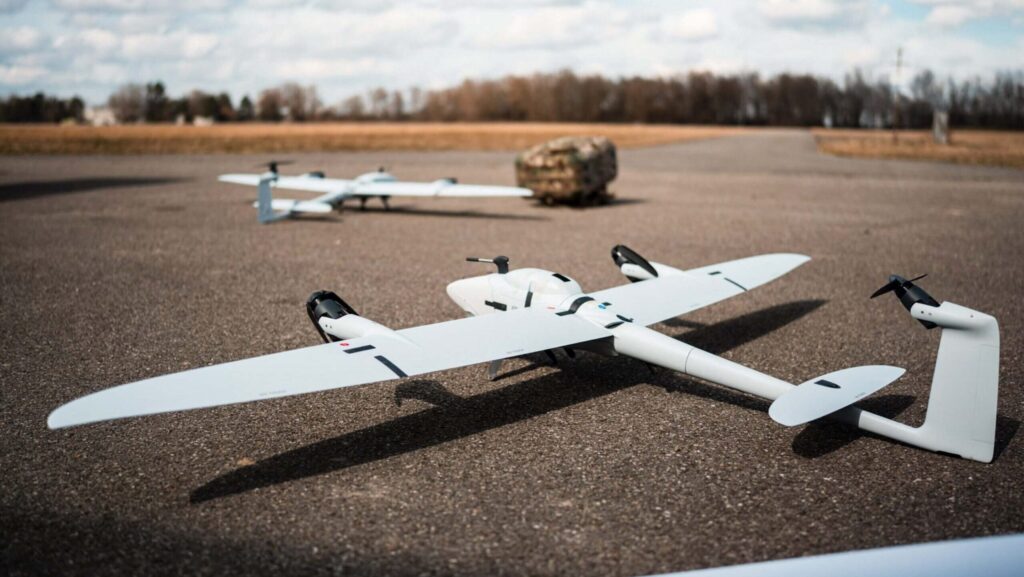
German drone manufacturer Quantum Systems has notified Estonia’s Competition Authority of its plan to acquire SensusQ, an Estonian defence-tech company focused on AI-enabled intelligence and battlefield data systems. According to Estonian business press, the agreement to acquire 100% of SensusQ from its 45 current shareholders was signed on 6 May. The transaction value has not been disclosed.
The planned deal follows Quantum Systems’ earlier Estonia-linked transaction. In February, the German company agreed to acquire a 60% stake in HEVI Optronics, an Estonian producer of electro-optical sensor systems. The concentration notice was submitted in March and approved by Estonia’s Competition Authority at the end of that month.
Together, the SensusQ and HEVI Optronics deals would give Quantum Systems two Estonia-based layers around its drone business: electro-optical sensing and AI-enabled intelligence software. The SensusQ acquisition fits into a broader European defence-tech consolidation: drone producers are moving beyond airframes and platforms toward sensors, data processing and battlefield-intelligence systems.
Data card: SensusQ and related Estonia-linked routes
| Case / route | Public detail | Business signal |
|---|---|---|
| SensusQ | Quantum Systems agreed to acquire 100% from 45 shareholders; price not disclosed | Defence-intelligence software capability acquired after a financially difficult phase |
| HEVI Optronics | Quantum Systems agreed to acquire 60%; approval followed at end-March 2026 | Sensor layer added to drone platform |
| Hanwha–Nortal–SensusQ | 2025 MOU around Battlefield Management System, with Redback IFV named as one possible platform | Platform route weakened after Estonia’s IFV procurement pivot |
| Project ASGARD | SensusQ announced AI-enabled intelligence-fusion contribution to British Army programme | UK digital-targeting route remained visible |
SensusQ develops AI-enabled intelligence and decision-support tools designed to combine information from UAVs, sensors, cyber events, open sources, human intelligence and field reports into a single operational picture. Earlier reporting said the company raised €3.8 million in 2024 to develop defence intelligence software and that its technology had been deployed in Ukraine.
The financial side is less straightforward. According to Äripäev Radar, Sensus Septima OÜ generated €109,088 in revenue in 2024 and posted an operating loss of €1.49 million. The Estonian business register shows the same 2024 revenue figure and a net loss of €1.58 million.
The company also went through a court restructuring procedure in early 2026. Public registry data show that Harju County Court initiated restructuring proceedings for Sensus Septima OÜ on 28 January, with Oliver Ennok appointed as restructuring adviser. The procedure was later terminated in March.
The shareholder structure adds another layer. Quantum Systems is acquiring 100% from 45 shareholders — a broad cap table for a company with limited commercial revenue. Public sources reviewed here do not disclose the full breakdown of those shareholders or the sale terms. The undisclosed price therefore should not be read automatically as a high-valuation start-up exit.
SensusQ’s platform routes had also changed. In September 2025, Hanwha Aerospace, Nortal and SensusQ signed an MOU to co-develop a Battlefield Management System, with Hanwha’s Redback IFV named among the platforms for which the system could be developed. The partnership combined Hanwha’s platform, Nortal’s system-integration role and SensusQ’s situational-awareness and decision-support expertise.
By March 2026, the Hanwha route was already conditional. ERR reported that Hanwha’s proposed €100 million investment package in Estonia was an offer rather than a completed deal, and that the plans would materialise only if Estonia selected Hanwha’s Redback infantry fighting vehicles. The package included an ammunition plant, a maintenance and repair centre, and R&D cooperation with Estonian companies.
In May, the Estonian government halted the new combat-vehicle procurement programme, whose total cost was more than €500 million, and redirected the money toward air defence, drones, unmanned systems, firepower, mobility and situational awareness. Defence Minister Hanno Pevkur linked the decision to lessons from Ukraine, market conditions and military advice from the commander of the Defence Forces.
SensusQ’s UK route remained visible. The company announced its contribution to the British Army’s Project ASGARD, a programme focused on digital targeting and AI-enabled decision support.
There was also a management shift before the restructuring and the Quantum deal. In May 2025, Marko Kaseleht, founder of SensusQ, moved to Nortal as Senior Vice President for Defence. Nortal said he remained a shareholder and supervisory-board member of SensusQ. That places the later SensusQ transaction in a wider Estonian defence-software network rather than in a standalone start-up story.
Quantum Systems has itself moved from start-up profile into European defence-tech scale-up territory. In May 2025, the company announced a €160 million funding round led by Balderton Capital, with participation from Hensoldt, Airbus Defence and Space, Bullhound Capital and LP&E AG. Existing investors named by the company included HV Capital, Project A, Peter Thiel, DTCP, Omnes Capital, Airbus Ventures, Porsche SE and Notion. In February 2026, Quantum Systems secured a further €150 million financing package backed by the European Investment Bank, Commerzbank, Deutsche Bank and KfW.
Data card: Quantum Systems capital profile
| Layer | Publicly named actors |
|---|---|
| Venture capital | Balderton, HV Capital, Project A, Omnes, Notion |
| Defence / aerospace | Hensoldt, Airbus Defence and Space, Airbus Ventures |
| Industrial / strategic capital | Porsche SE, Bullhound Capital, LP&E |
| Strategic-tech investor | Peter Thiel |
| Public / bank financing | EIB, KfW, Deutsche Bank, Commerzbank |
Peter Thiel’s presence among Quantum Systems’ investors is also notable. He is known as one of the more visible figures in the Western strategic-tech and defence-tech investment environment. Public sources do not show him as controlling Quantum Systems or influencing the Estonian transaction, but his name helps define the type of capital around the company.
Hensoldt’s presence is also relevant. As a German defence-electronics and sensor group, it sits close to the same value chain Quantum Systems is strengthening through HEVI Optronics and SensusQ: sensing, data capture and intelligence processing. The Estonian acquisitions therefore fit both the software and the sensor side of Quantum Systems’ platform strategy.
The deal’s significance is in the asset mix: software, sensors and battlefield data systems rather than market access. Drone hardware is becoming less defensible as a standalone product category. Value is moving into the system around the platform — sensor payloads, AI-assisted data interpretation, secure communications, mapping, integration with military users and decision-support software.
For Estonia, the signal is its role as a compact technology interface: a place where drone-related software, sensors and Ukraine-tested battlefield systems can be developed, financed, acquired and integrated into larger European defence platforms.
In defence technology, the Baltic interface is becoming more valuable. The signal is asset quality: software layers, sensor systems, battlefield data tools and access to European defence capital.
Sources: ERR, SensusQ, Äripäev Radar, Estonian e-Business Register, Inforegister, Quantum Systems, EIB, Estonian Competition Authority and Estonian business press.