Analysis · Industry & Manufacturing
A Choice That Previously Did Not Exist: Baltic Agriculture, NGTs and the Climate Shock
By early June 2026, the Baltic debate around GMOs no longer fits the old “GMO or non-GMO” frame. The formal language in Brussels has moved to CRISPR, new genomic techniques, seed transparency, patent disclosure, organic coexistence and the regulatory categories that will decide who can use these tools.
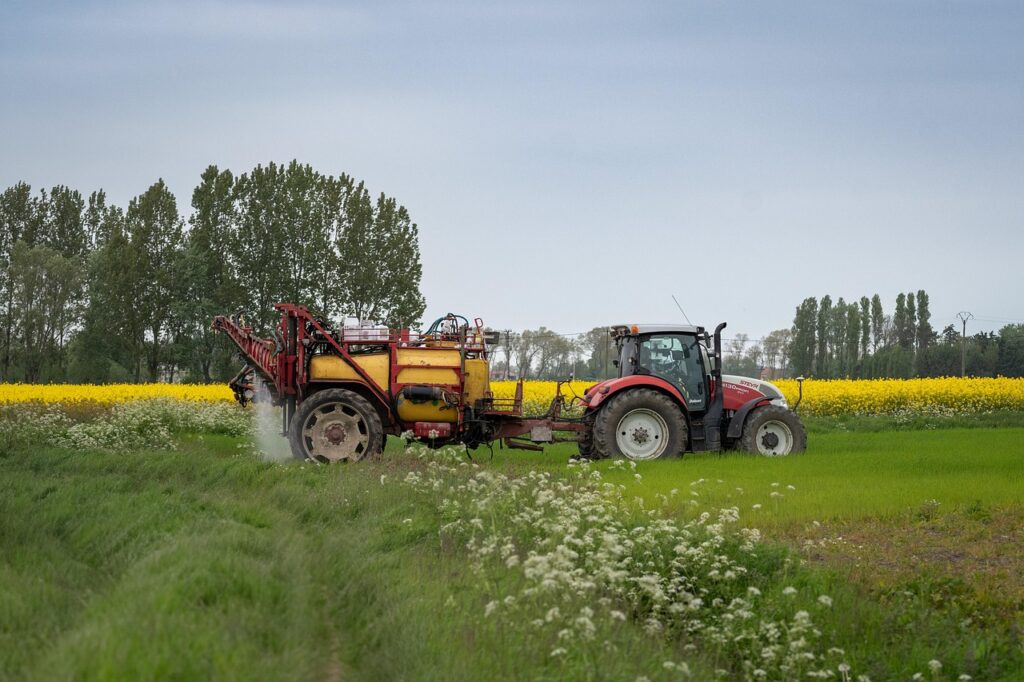
The Baltic GMO debate is no longer only about whether genetically modified crops will be grown in local fields. It is becoming a question of climate adaptation, fertiliser costs, seed control, organic certification and whether small northern markets can use new breeding tools without losing control over them.
By early June 2026, the Baltic debate around GMOs no longer fits the old “GMO or non-GMO” frame. The formal language in Brussels has moved to CRISPR, new genomic techniques, seed transparency, patent disclosure, organic coexistence and the regulatory categories that will decide who can use these tools.
The EU file is now close to adoption. The European Parliament’s legislative schedule describes the NGT proposal as “close to adoption”; Parliament and Council reached a provisional agreement in December 2025, the Council endorsed its first-reading position on 21 April 2026, and a plenary vote was tentatively scheduled for the week of 15 June.
This article focuses mainly on NGT-1 plants, because this is where the practical Baltic dilemma is most visible. Under the Council’s current text, NGT-1 plants are treated as equivalent to conventional varieties, while seeds and other plant reproductive material would still be labelled to help operators maintain NGT-free supply chains. NGT-2 plants, involving more complex genetic modifications, would remain subject to existing EU GMO legislation, including authorisation, traceability and mandatory labelling.
The timing matters. Latvia, Lithuania and Estonia are entering another climate-stressed agricultural season after several years of weather shocks. The pressure is no longer only meteorological. Fertilisers, fuel, energy and logistics have become part of the same calculation. At EU level, overall nitrogen fertiliser prices in April 2026 stood 71% above the 2024 average, while fertiliser affordability was at its weakest level since 2022.
For Baltic farmers, the critical point may come not during the current harvest, but before the next one. Latvian agricultural representatives are already warning that the biggest problem will begin in autumn, when fuel, mineral fertilisers and plant-protection products must be bought for the next season. LOSP chairman Guntis Gūtmanis has said current prices are roughly 30–50% higher than last autumn.
These figures are not directly comparable: one describes the EU fertiliser background, the other a Latvian farm-level warning ahead of autumn purchases. But they point in the same direction. The cost base of the next season is rising before the sowing decision is made.
That changes the meaning of adaptation. Baltic farmers are no longer only calculating yields. They are calculating whether the next sowing cycle still makes economic sense.
In 2025, the warning signs were already visible across the region. Latvia declared a nationwide state of emergency in agriculture after prolonged rainfall, frost and floods. By the end of the emergency period on 4 November, farmers had submitted information on 95,295 hectares affected by adverse weather conditions, with provisional losses of €110.95 million, according to Latvia’s Ministry of Agriculture.
Yet Latvia’s 2025 harvest was not a simple crop-failure story. Provisional data from the Central Statistical Bureau show that almost 3.2 million tonnes of grain were harvested, 1.4% more than in 2024, while the average cereal yield rose by 7.1%. The pressure came through quality, prices and farm finances: grain purchases fell by 5.6%, and the average purchase price was down by 14.0%.
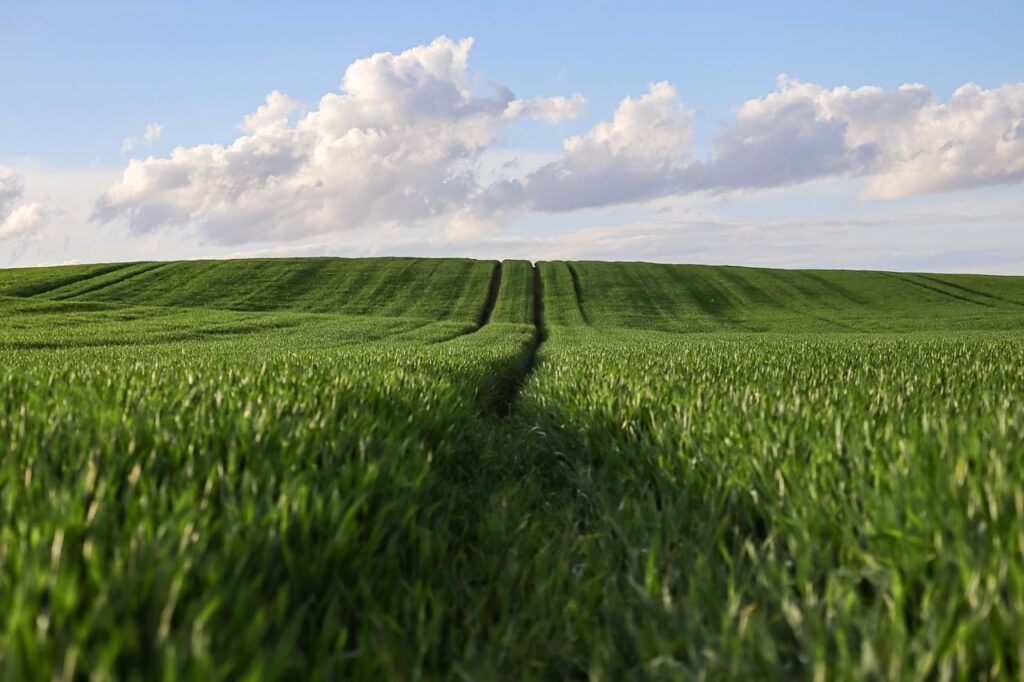
Lithuania faced a different version of the same stress. Spring frosts damaged crops, especially winter rapeseed, and insurance payments for frost-damaged fields reached €12.8 million. Lithuanian crop assessments also pointed to frost damage in winter rapeseed and later complications for crops under difficult weather conditions.
Estonia again showed how quickly weather risk can become a production problem. During the April–July growing season, average precipitation reached 134% of the norm and exceeded 170% in some regions. Farmers faced flooded fields, delayed fieldwork, crop lodging, slower harvesting, disease and weed pressure, and delayed winter-crop sowing. Estonia also asked the European Commission for emergency support from the agricultural reserve.
These are not identical crises, but they point to the same structural problem. Baltic agriculture is being forced to adapt faster than its regulatory and market environment is changing.
At farm level, genetics is already part of ordinary professional practice. Dairy farmers discuss genomic selection, feed efficiency and herd resilience. Crop farmers calculate disease pressure, unstable quality, delayed sowing and input costs. The question on the ground is not whether genetics belongs in agriculture. It already does. The question is whether plant breeding will be allowed to catch up with the speed of climate change.
While Brussels is assembling files for new regulatory categories, Baltic farmers are already assembling survival strategies.
This is why the EU’s reform of new genomic techniques matters for the Baltics. The issue is not whether Latvia, Lithuania or Estonia will suddenly abandon precaution. They will not. The real question is whether small northern agricultural markets can use new adaptation tools without losing seed independence, organic credibility, certification control and public trust.
That is the choice that previously did not exist.
Latvia: caution remains, but preparation has already started
Latvia remains the Baltic country where the tension between official caution and practical preparation is most visible. Its public GMO position has changed little: genetically modified crop cultivation is not a policy direction, and the precautionary principle remains politically important. Yet the EU’s NGT reform, repeated climate shocks and the realities of feed imports are pushing the issue out of the purely theoretical zone.
According to information provided by Latvia’s Ministry of Agriculture to Neatkarīgā(nra.lv), Latvia plans to preserve its cautious approach and currently does not plan policy changes. At the same time, the ministry confirmed that the Baltic states determine their positions independently and supported the EU NGT regulation proposal. That should not be read as a Baltic political turn toward GMO cultivation. It is better understood as a sign that the region is preparing to operate inside a changing EU framework while preserving national caution.
That preparation is not abstract. The Ministry of Agriculture told nra.lv that Latvia is already preparing for the application of the regulation. BIOR, the Institute of Food Safety, Animal Health and Environment, has carried out agricultural research on the detection of food and feed obtained through new genetic modification methods and on scientific risk assessment of such products.
The 2021 rapeseed incident shows why control matters in Latvia. During seed and propagation-material monitoring, one spring rapeseed seed lot was found to contain a small admixture of genetically modified rapeseed line RT73. Part of the contaminated seed material had already been sown by 22 farms in 85 fields, covering 834.34 hectares. The contaminated crops were destroyed mechanically and/or chemically, depending on the plant-development stage, to prevent flowering. In 2023, VAAD checked the affected fields again and found no violations.
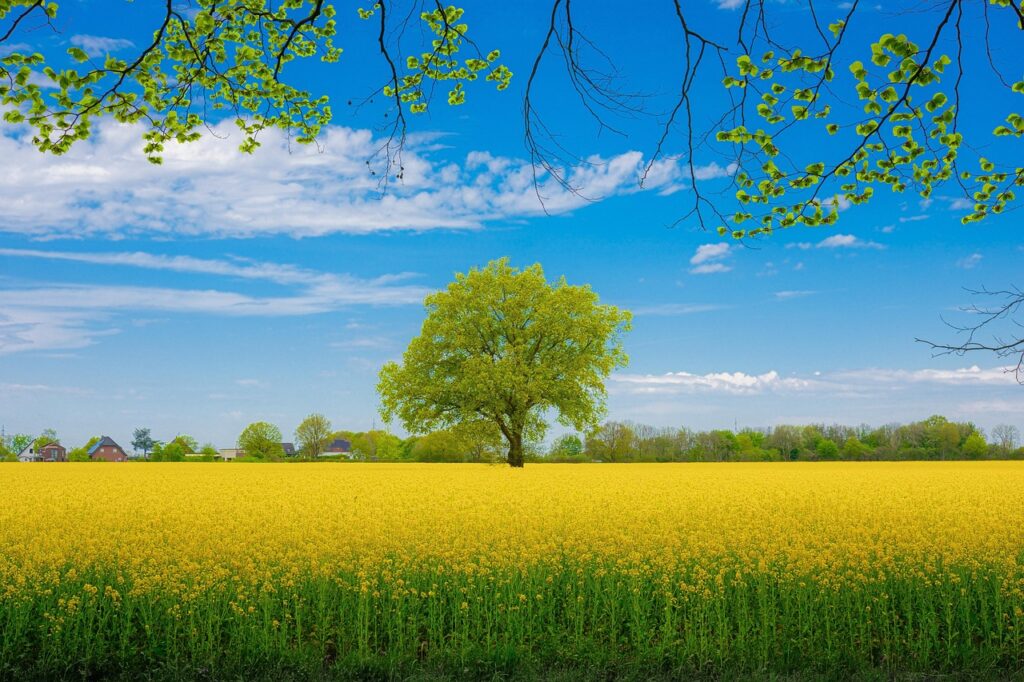
The case was not deliberate GMO cultivation. It was seed contamination. But that is precisely the point: a non-GMO cultivation model still has to operate inside open seed, feed and commodity markets.
The farmer position is also more nuanced than a simple “for” or “against” GMO. As reported by nra.lv, Zemnieku saeima foreign-policy expert Valters Zelčs distinguishes between transgenic crops and NGTs. The organisation objects to transgenic crops, especially where seeds are not reproducible and farms risk dependence on a specific supplier or patent holder. At the same time, it expresses cautious interest in NGT-1 crops if they are essentially comparable to classical breeding, only more precise and faster, and do not involve the insertion of foreign genetic material. For farmers, the central issue is control: seed independence, competitiveness and avoiding another administrative burden.
For the organic sector, the question is different. Latvia’s organic profile is not just an environmental position, but also an export and reputation asset. The Ministry of Agriculture has stressed that organic farming remains important to Latvia and that coexistence requirements will continue to apply. At EU level, the Parliament’s legislative-train summary states that all NGT plants would remain banned in organic farming. For organic producers, the issue is therefore not only the formal ban itself, but whether coexistence rules, seed transparency and certification systems are strong enough to protect buyer trust in small markets.
Latvia also illustrates the feed-market paradox. The country may reject GMO cultivation in its own fields, but its livestock sector remains linked to global feed chains. As one Latvian sector representative put it in nra.lv, if soybean feed from Asia or South America can arrive by ship, be transported to Latvia and still be cheaper than locally produced rapeseed-based alternatives, the competitiveness problem is no longer ideological. It is structural.
This is why Latvia should not be read as a country suddenly moving toward GMO cultivation. It is not. Rather, it is a country trying to preserve a cautious non-GMO identity while preparing the technical, legal and certification capacity needed for a more complex NGT environment. Climate stress has made that balancing act harder; the EU reform has made it unavoidable.
Lithuania: a formal ban, but not an absence of interest
Lithuania enters the NGT discussion from the clearest legal position in the Baltic region. Since 2015, Lithuania has sought to ensure that genetically modified plants are not cultivated in the country. The ban applies across the whole national territory, although it does not apply to applications for growing genetically modified plants for scientific research purposes.
Officially, Lithuania has not moved away from this position. Monitoring remains strict: in 2025, Lithuania’s State Plant Service reported that 113 GMO-monitoring samples were taken, including from crops, plant propagation material and imported plant products, and GMO was not detected.
At the same time, Lithuania is not technologically indifferent. The issue is not a lack of scientific capacity; it is the legal classification of the technology and the cost of moving from research to field use. A Lithuanian analysis of new genetic modification methods noted that, to its knowledge, such methods were not being used in Lithuania to create new plant varieties, and that the Ministry of Environment had not received applications or approved permits for such use.
This distinction is important. Lithuania shows one of the key contradictions of the Baltic position: the law is strict, public caution remains strong, but the professional sector can still see why faster breeding tools may become relevant.
The climate context strengthens that argument. In 2025, Lithuania declared a nationwide emergency after spring frosts severely affected farmers across the country. Provisional estimates by the Agriculture Ministry and local municipalities suggested that 70–80% of fruit and berry crops had been destroyed in some regions, with losses reaching up to 100% in the worst-hit areas. Winter rapeseed was also among the affected crops, while later rain and unstable weather conditions complicated the season further. According to the fruit and berry association Vaisiai ir uogos, the apple harvest was expected to reach only 10–15% of average levels, while blackcurrant output could fall to 5–10%. The problem was not only yield loss, but quality, timing, disease pressure and import dependence.
For Lithuania, the NGT debate is therefore not about abandoning a formal non-GMO position. It is about whether a country with a strict national ban can still access breeding innovation if EU law creates a separate pathway for NGT-1 plants.
Lithuania’s position remains cautious, but it is no longer empty caution. It is caution waiting for legal space.
Estonia: no formal shortcut to adaptation
Estonia is different from Latvia and Lithuania. It does not have the same clearly visible nationwide GMO-ban model as Lithuania, and it does not rely on the same municipal restriction model as Latvia. Yet in practice, GMO crops are absent from Estonian fields. OECD material on safety assessment of biotechnology notes that Estonia follows EU rules on GM food and feed, that GMOs are mainly used in animal feed, and that MON810 — the only GM crop that can be cultivated in the EU — has not been cultivated in Estonia.
The 2025 season exposed why adaptation cannot be reduced to formal law. Estonia reported an exceptionally wet growing season, with precipitation from April to July at 134% of the norm and above 170% in some regions. Farmers faced flooded fields, delayed fieldwork, slow harvesting, crop lodging, disease and weed pressure, and delayed sowing of winter crops.
The pressure had already been visible a year earlier. According to the European Environment Agency, citing Estonia’s Ministry of Regional Affairs and Agriculture, the average income shortfall in 2024 was €315 per hectare for rapeseed, €308 per hectare for spring barley and €692 per hectare for replanted winter rapeseed. Total losses, including replanting costs, for rapeseed and barley growers were estimated at €52 million.
EU crop monitoring also points to the same risk pattern. In July 2025, the Joint Research Centre reported that excessive rainfall in Finland and Estonia was complicating fieldwork and raising concerns about localised yield losses and deteriorated crop quality. It also noted that excessive wetness could limit field access, favour crop diseases and localised hypoxia, and, if persistent, negatively affect winter-crop yields.
Estonia’s case therefore should not be reduced to “less regulation means more readiness”. A small market, fragmented production in some sectors, limited incentives and regulatory uncertainty can be just as restrictive as a formal prohibition.
Oilseed rape shows another side of the same problem. Across northern European agriculture, pest pressure, plant-protection constraints and changing weather conditions increasingly interact. That is not a GMO issue in the narrow sense, but it belongs to the same regulatory reality: the tools available to farmers are determined not only by biology or economics, but by EU approvals, national registration, market size and administrative cost.
This makes Estonia a useful counterexample. The absence of a formal nationwide GMO-ban model does not automatically create readiness for NGT adoption. Estonia’s GMO-free reality is therefore less ideological than structural. It shows that even where the law is less visibly restrictive, adaptation still depends on market organisation, research capacity, certification systems and whether new tools can actually reach farms in a usable form.
The Baltic choice
The Baltics remain effectively GMO-free in commercial crop cultivation. But that does not mean they are outside genomic agriculture.
The real divide is no longer between “nature” and “technology”. That old frame misses what is happening on farms. Genetics is already used in livestock management. Plant breeding is already part of climate adaptation. Feed imports already connect local production to global GMO-linked commodity chains. Organic farming still needs protection and trust. Small markets still need access, not only regulation on paper.
The new choice is different.
The Baltic question is whether the new European framework will actually work for small markets: whether it can preserve transparency, seed access, certification control and organic credibility, rather than leaving adaptation to imports, higher input costs, weaker local breeding options and less control over the terms.
Patent transparency may reduce uncertainty, but it does not by itself answer the farmers’ question of dependency. The Council text provides for patent information in a public database and an expert assessment of patenting effects, but the impact on seed availability and sector competitiveness still remains to be tested.
That is why the NGT debate is no longer a niche biotechnology file. For Baltic agriculture, it is becoming part of the autumn sowing question.