Editorial · Transport & Logistics
Baltic aviation 2025: when the balance finally shifted
🇪🇪🇱🇻🇱🇹Baltic aviation 2025: when the balance finally shifted
🇪🇪🇱🇻🇱🇹Baltic aviation 2025: when the balance finally shifted
2025 became the year when Baltic aviation changed its hierarchy — quietly, structurally, and irreversibly.
Not because one airport collapsed or another exploded overnight, but because different models were stress-tested under real demand — and delivered different outcomes.
Final passenger traffic, 2025 (official)
🇱🇹Lithuania (system view)
Vilnius Airport: 5.11M, +7% y-o-y
Kaunas Airport: 1.60M, +12%
Palanga Airport: 446K, +20%
➡️ Lithuanian Airports total: 7.15M passengers, +8.5% y-o-y
🇱🇻Latvia
Riga Airport: 7.11M, 0%
Estonia
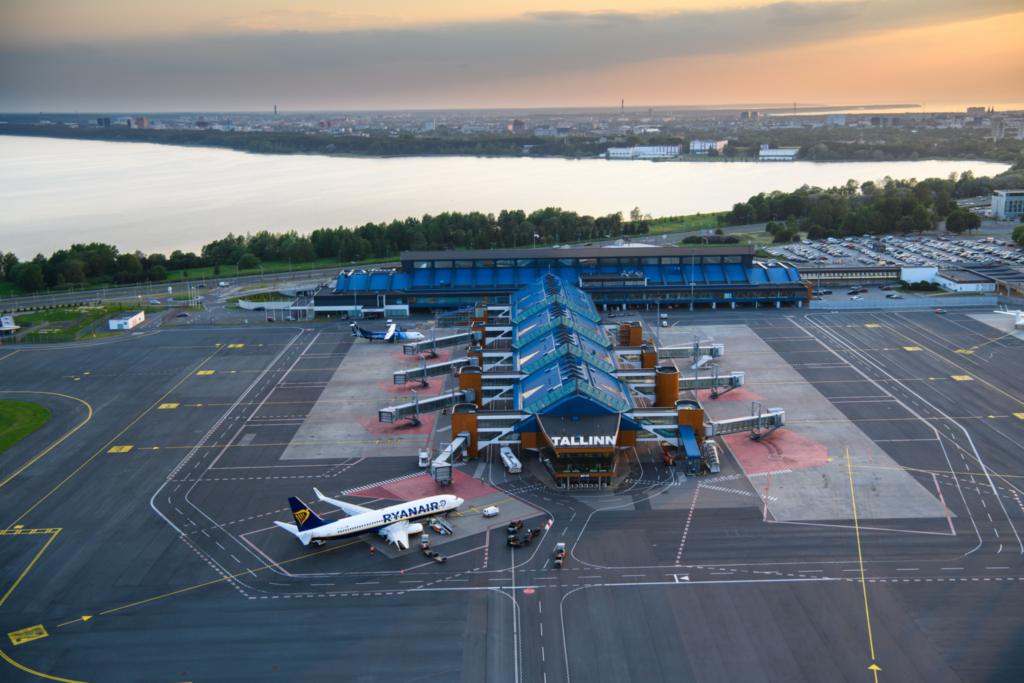
Tallinn Airport: 3.49M, 0%
➡️ Estonia total: 3.58M, +1%
For the Baltic region, a gap of 40–45 thousand passengers is not marginal.
It equals:
several full European routes per year,
a decisive argument in airline negotiations,
and, most importantly, a shift in perceived market leadership.
For the first time in two decades, Lithuania closed the year as the largest aviation market in the Baltics.
December was not noise — it was a stress test
December is the peak-load month. It exposes structural limits.
What happened in December 2025:
Lithuania: +13% y-o-y, strong acceleration in Vilnius
Riga: –5% y-o-y, despite being a traditional holiday gateway
Tallinn: +9.4% y-o-y, already operating near annual record levels
This matters because:
Lithuania absorbed peak demand without visible friction,
Riga showed signs of pricing and structural saturation,
Tallinn confirmed it can grow independently, not as a feeder.
December did not create the shift.
It revealed it.
The Lithuanian factor everyone keeps missing
Funding connectivity, not a carrier
What truly differentiates Lithuania from its neighbours is not airport size or geography, but the financing philosophy.
Lithuania does not subsidise an airline.
Lithuania subsidises connectivity.
Instead of channeling public funds into sustaining a single national carrier, the state uses its instruments to:
co-finance routes, not companies,
share market-entry risk, not corporate losses,
remain carrier-neutral by design.
Low-cost airlines, legacy carriers, and regional operators all compete on the same field, with support tied to connectivity outcomes, not to political loyalty or ownership.
The guiding question is not
“How do we protect our airline?”
but
“Which routes does the economy need — and who is ready to operate them?”
Why this model scaled in 2025
Lithuania: shared risk, shared upside
Early-stage route risk is partially socialised.
Successful routes remain market-driven.
Airlines can enter, test, expand — or exit — without political escalation.
This produces:
competitive density,
constant network experimentation,
downward pressure on fares,
resilience when one carrier adjusts capacity.
Latvia: concentration risk by design
Latvia’s model remains structurally different:
public resources are effectively tied to one dominant carrier,
connectivity depends on the health of that carrier’s balance sheet,
market entry for competitors is more constrained.
The system is stable — but rigid.
Estonia: stability that no longer feeds the hub
Tallinn’s 2025 result is often misread.
Passenger traffic finished within 0.1% of the all-time record.
Growth is concentrated on point-to-point routes.
The expanding presence of Wizz Air reinforces a low-cost, frequency-driven logic.
The key point:
Tallinn’s stability no longer translates into support for Riga’s hub role.
It stabilises itself, not the region.
Why 2026 will be different — even without shocks
2025 did not yet produce a mass behavioural shift.
But it created the economic preconditions.
If current price structures and route competition persist into summer 2026:
tour operators will begin testing alternative departure geographies,
airline capacity will follow consolidated demand,
hub loyalty will matter less than total package economics.
This is not disruption.
It is rational adaptation.
Lithuania
Lithuania did not win 2025 by accident.
It won by replacing airline-centric policy with connectivity-centric financing.
Riga did not lose relevance — but it lost inevitability.
And once inevitability disappears, the aviation map stops being static.
2026 will not be about drama.
It will be about which model adapts faster.BSM © 2026