Analysis · Transport & Logistics
Robot runs a red light, collides with a Tallinn bus — and keeps going
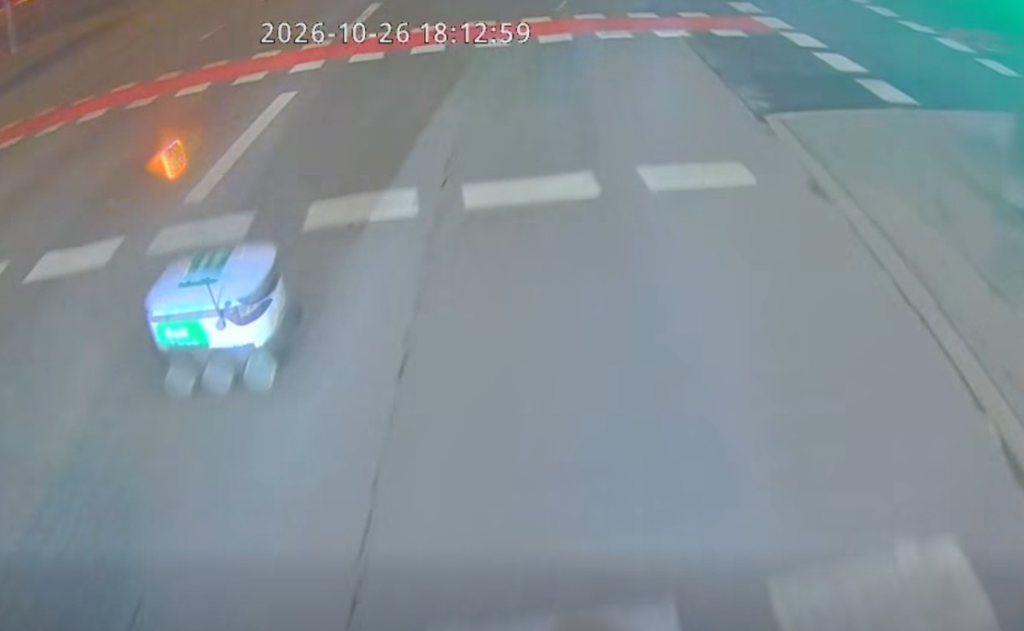
Up to nine passengers were injured after a delivery robot crossed a Tallinn street against a red light. Similar incidents in Finland and the US raise a question that is becoming harder to ignore: who is responsible when autonomous deliveries go wrong?
On 26 October, a Starship delivery robot entered a pedestrian crossing against a red light at the junction of Luise and Tehnika streets in Tallinn.
An approaching bus driver braked sharply but could not avoid the robot. According to Tallinna Linnatransport (TLT), eight or nine passengers fell and were injured.
The robot carried on.
Video footage from the bus, reported by ERR, shows the collision. TLT says its driver responded appropriately to the danger. Responsibility for the accident has yet to be established.
Starship Technologies, whose robots make deliveries for Bolt Food, launched an internal investigation and changed its routes to avoid the junction.
It has happened before
Tallinn is not the first European city to experience problems with delivery robots.
In January 2024, a Starship robot slipped on a snowy pavement in Helsinki’s Pasila district and damaged both doors of a parked car. A passer-by helped it out of the snow, and the robot drove off. The witness reported the incident to the authorities, according to Finnish broadcaster Yle.
In June 2025, another Starship robot failed to give way to a tram in Helsinki’s Kalasatama district and ended up underneath it. Nobody was injured, and the robot suffered no serious damage. According to MTV Uutiset, it later returned to service.
A case in the United States has reached the courts. In Jersey City, New Jersey, cyclist Conor Shannon suffered a shoulder fracture and a head injury in an incident involving an Avride delivery robot. In May 2026, News 12 reported that Shannon had filed a lawsuit against Avride and its delivery partner Uber. Liability has not been determined.
Latvia takes another step towards automated driving
On the same day as the Tallinn accident, Latvia recognised a provisional type approval issued in the Netherlands for Tesla’s assisted-driving technology, previously known as Full Self-Driving (Supervised).
According to the Latvian Transport Ministry, the system can steer, brake and navigate junctions, but it remains a Level 2 driver-assistance system. The driver must continue to supervise the vehicle and remains responsible for its operation.
Starship’s delivery robots, by contrast, travel without an onboard driver.
For delivery companies, automation offers the prospect of lower labour costs and more efficient local distribution. But the potential savings come with other expenses, including insurance, remote supervision and compensation when things go wrong.
The Tallinn accident is a reminder that taking the driver out of a vehicle does not remove the need for accountability.
The robot may have continued its delivery. The people and companies behind it still have questions to answer.