Analysis · Transport & Logistics
CapMan buys Hansabuss — and a place inside Latvia’s regional mobility system
Hansa Group has agreed to sell Hansabuss, the largest private operator of public bus lines in the Baltics, to CapMan Nordic Infrastructure II,
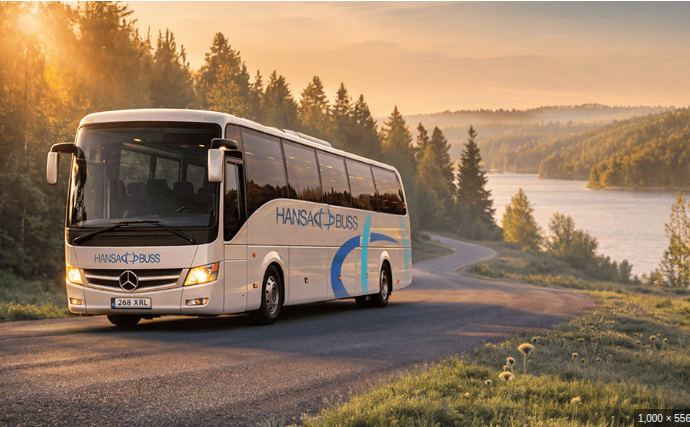
Hansa Group has agreed to sell Hansabuss, the largest private operator of public bus lines in the Baltics, to CapMan Nordic Infrastructure II, a fund managed by Finnish investment manager CapMan Infra.
A Nordic infrastructure buyer, not just another bus owner
The distinction matters. CapMan is a Nordic private-markets investment manager with €7.2 billion in assets under management. The acquiring vehicle is CapMan Nordic Infrastructure II, a €375 million closed-end infrastructure fund, rather than CapMan’s full €7.2 billion investment platform. It is still a very different owner profile from Hansa Group, the Estonian investment holding that built Hansabuss over three decades.
At first glance, this is an Estonian business sale. Hansabuss was founded in Estonia in 1995 and became one of the best-known private bus operators in the region. But the asset being sold is already Baltic. Hansabuss operates in Estonia and Latvia, and its Latvian platform has been built over several years through local transport assets.
CapMan–Hansabuss deal: buyer and asset scale
- CapMan assets under management: €7.2bn
- Acquiring fund, CapMan Nordic Infrastructure II: €375m
- Seller, Hansa Group revenue: over €120m
- Hansabuss revenue: around €50m
- Hansabuss fleet: 500+ buses
- Hansabuss employees: around 800
Latvia: a regulated market with real scale
The Latvian part is important. Tukuma Auto had already been part of Hansa Group since 2016. In April 2026, the Latvian structure was simplified: Tukuma Auto completed a reorganisation by merging AIPS, Ludzas Autotransporta uzņēmums and Hansabuss Latvia into one company, now operating as Hansabuss Latvija. According to Cobalt, Tukuma Auto alone had a fleet of 180 buses, served 2.8 million passengers a year and operated around 11 million kilometres annually in Tukums, Dobele, Jēkabpils, Preiļi and Līvāni municipalities, as well as Jūrmala.
So CapMan is not entering Latvia from zero. It is buying into an existing regional transport platform.
That matters because Latvia’s regional bus market is not a simple open market. Latvia’s Road Transport Administration, ATD, plans regional public transport, issues licences and grants the right to provide public transport services to carriers selected through procurement procedures. Long-term public-service contracts are central to the model, even as contract length and tender conditions remain part of the sector’s current debate. The visible operator circle includes companies such as Nordeka, Liepājas autobusu parks, Daugavpils autobusu parks, Latvijas Sabiedriskais Autobuss, CATA, VTU Valmiera and Hansabuss Latvija, among others.
This is a contract-based public-service market. It is not a sector where dozens of operators can freely expand by adding buses. The value of the Latvian part of Hansabuss is therefore not only in vehicles, passengers or depots. It is also in access to an existing regulated operator circle.
Latvia’s regional mobility: scale and pressure
- State-supported regional public transport passengers in 2025: 41.78m
- Regional bus passengers in 2025: 20.46m
- Commercial bus passengers in 2025: 1.07m
- Total bus passengers in regional + commercial services: 21.53m
- Cancelled bus services in less than seven months of 2025: 740
- Latgale residents aged 65+: 25.3%
Why stress can still create value
The economics are difficult. Latvia has a broad system of state-mandated fare discounts. In ageing rural areas and small towns, discounted passengers are not a marginal issue; they can be part of the core economics of a route. Lux Express shows the risk on the commercial side. It returned to Latvian intercity routes after an earlier exit, but later disputed compensation for passengers travelling with state-mandated fare discounts. In May 2026, the Public Transport Council approved a partial payment of €529,742 to Lux Express Latvia, while the full calculated compensation was €670,397.69 and the remaining part was linked to further conditions and verification.
The issue is not only passenger demand. It is whether compensation for state-mandated discounts is timely, predictable and administratively clear.
There is also a labour constraint. Latvia’s bus market has a driver problem. During 2025, cancelled regional trips because of driver shortages became a regular issue. For an operator, the question is not only whether it owns enough buses. It must also keep enough drivers in the system to fulfil contracted routes.
Demography deepens the pressure. Latvia’s population is ageing, and the pressure is strongest in regions where public transport often has the greatest social role. Ageing increases the social need for regional mobility, but it also narrows the working-age base from which drivers can be recruited.
The fourth pressure is physical infrastructure. Green fleet renewal is not only about buying electric or low-emission buses. It also requires depots, charging, maintenance skills and roads capable of supporting reliable daily service. Latvia’s regional transport remains exposed to infrastructure quality that operators themselves do not control.
This is why the CapMan deal is more interesting than a standard company sale.
CapMan is not buying a comfortable market. It is buying a consolidation option in a stressed public-mobility system. Public budgets are tight, fare-discount compensation can be delayed or contested, drivers are scarce, passengers are ageing, roads remain uneven and green fleet requirements are becoming more expensive.
But stress can also create value for an infrastructure investor. Smaller local operators may find it increasingly difficult to finance fleet renewal, absorb payment delays, manage labour shortages and meet future procurement standards. A larger owner with Nordic infrastructure experience may be better positioned to survive the next investment cycle.
CapMan’s own logic points in that direction. The fund says the investment supports essential public transportation infrastructure in Northern Europe. It also refers to low-emission and electric fleet investments, tendering capabilities and operational development. CapMan Infra has already invested in Finland’s largest bus company, Koiviston Auto, and Norway’s ferry operator Norled — transport infrastructure assets where fleet renewal, public procurement and long-term service obligations matter more than quick ticket-sales growth.
For Latvia, the signal should not be overstated. CapMan will not automatically fix the bus-driver shortage, the road network or the public-transport budget. But the weight class has changed. Hansabuss Latvija is no longer just part of an Estonian business group. It is becoming part of a Nordic infrastructure-capital platform.
Sources: CapMan press release and CapMan Nordic Infrastructure II fund page; Cobalt Legal on the Hansabuss Latvija reorganisation; Latvia’s Road Transport Administration (ATD) on 2025 passenger data and Lux Express compensation; Latvian Public Media/Latvian Radio on the Lux Express dispute and bus-driver shortages; Central Statistical Bureau/LSM on 2026 demographic data; LETA/Baltic Times on Latvia’s 2026 road funding.