Editorial · Transport & Logistics
Chinese Ownership, Aircraft Hangars and Regional Aviation Repair
Conclusion. The Magnetic MRO case illustrates Estonia’s approach to cooperation with Chinese companies: infrastructure remains under local ownership, while foreign capital is integrated through commercially grounded, horizontal partnerships. Rather than framing such projects politically, Tallinn has
How a pragmatic investment approach reshaped the balance of power in Baltic aviation
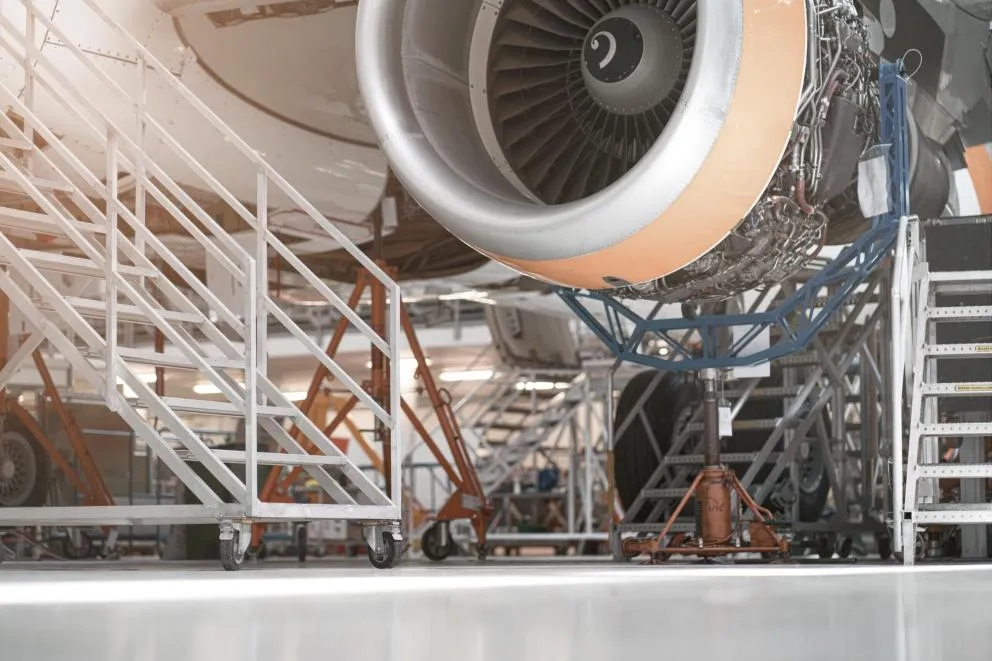
A new aircraft maintenance complex opened by Magnetic MRO in Tallinn is set to increase Estonia’s aircraft repair and maintenance capacity by roughly one third. The facility is located in Airport City, the aviation and business district developed next to Tallinn Airport.
The new hangar can accommodate up to three medium-sized aircraft simultaneously and will create around 80 additional skilled jobs. Until now, Magnetic MRO serviced approximately 100 aircraft per year in Tallinn; the new complex adds capacity for about 40 more aircraft annually.
Who owns Magnetic MRO
Magnetic MRO is owned by the Chinese aviation group Hangxin, headquartered in Shanghai. The group operates across aviation services, asset management and MRO activities in Asia, Europe and the Middle East. Magnetic MRO serves as Hangxin’s main MRO platform within the European Union.
Despite Chinese ownership, the company’s operational and management centre is based in Tallinn. According to CEO Risto Mäeots, the group’s total annual turnover is around €160 million, with approximately €40 million generated in Estonia. At the same time, the most technologically complex maintenance work within the group is carried out specifically in Tallinn, while operations elsewhere focus more on lighter maintenance, parts trading and asset transactions.
Why the airport invests in hangars
The maintenance hangar was financed by Airport City — a real estate development arm of Tallinn Airport — with an investment of around €14 million. The hangar remains airport property and is leased to the MRO operator. This structure provides the airport with stable rental income and supports lower airport charges and service fees.
The new facility is located next to cargo terminals operated by DHL and FedEx, reinforcing Tallinn Airport’s role as a combined aviation, maintenance and cargo hub.
From Riga to Tallinn: shifting Chinese air cargo flows
This infrastructure-based approach has contributed to Tallinn gradually taking over part of the Chinese e-commerce air traffic that previously passed through Riga. These flows are primarily linked to platforms such as AliExpress and Temu.
Tallinn’s advantage has not been driven by airport infrastructure alone. An important role has also been played by Omniva, Estonia’s state-owned postal and logistics operator. For several years, Omniva has systematically developed sorting and delivery solutions for Chinese e-commerce platforms, integrating air cargo with rapid onward distribution to Finland and other Nordic markets.
Combined with digitalised customs procedures and close logistical integration with Scandinavia, this airport–postal logistics ecosystem has positioned Tallinn as a more efficient transit and sorting hub for Northern Europe.
Aircraft maintenance across the Baltic states
Estonia
Estonia has built a clear anchor model centred on Magnetic MRO. The state, via airport-linked structures, invests in infrastructure, while the private operator invests in technology, personnel and long-term contracts. The focus is on complex maintenance, engines and composite work.
Lithuania
Lithuania’s aircraft maintenance sector is dominated by large corporate structures, most notably FL Technics, part of Avia Solutions Group. The country hosts several major maintenance bases in Vilnius and Kaunas, supported by additional regional projects.
Latvia
After the exit of FL Technics and the bankruptcy of SmartLynx Airlines in November 2025, Riga was left without a single anchor MRO centre. Aircraft maintenance services continue to operate through several independent providers, including:
Airline Support Baltic
Jet Flight Service
Airside Maintenance Group
Capital Handling (primarily business aviation)
Services remain available, but the market is fragmented and lacks a large-scale infrastructure project comparable to those in neighbouring Baltic states. the analysis continues in the next section.
Conclusion.
The Magnetic MRO case illustrates Estonia’s approach to cooperation with Chinese companies: infrastructure remains under local ownership, while foreign capital is integrated through commercially grounded, horizontal partnerships. Rather than framing such projects politically, Tallinn has focused on building hangars, servicing aircraft and absorbing cargo flows — gradually strengthening its position in the Baltic aviation market.