Editorial · Transport & Logistics
DFDS expands capacity on Karlshamn–Klaipėda route with larger RoPax ferry
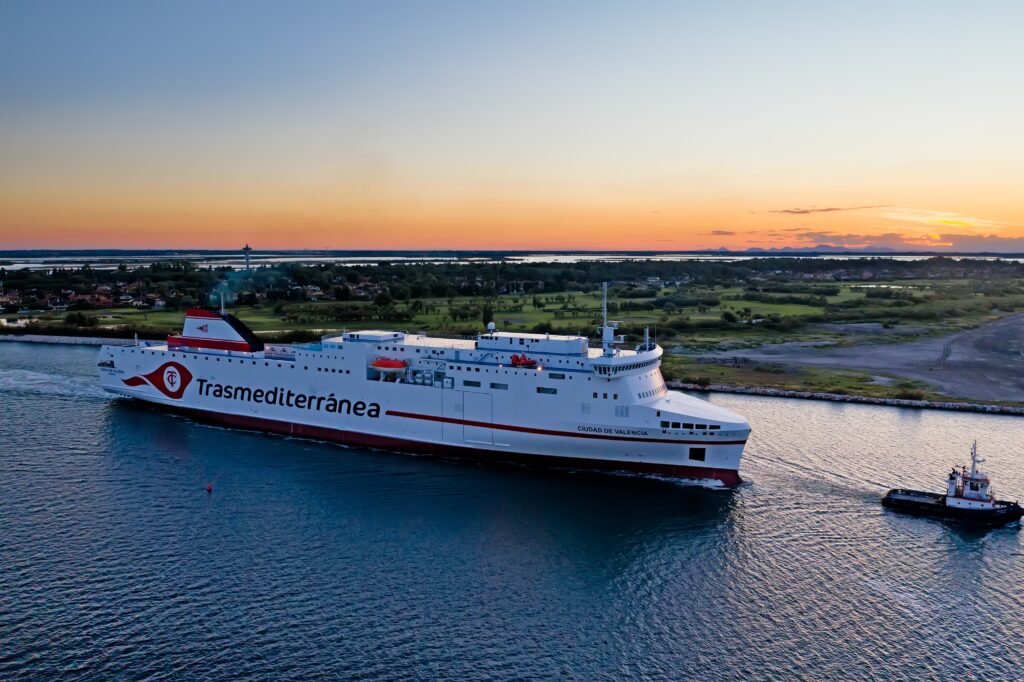
DFDS will increase capacity on the Karlshamn–Klaipėda corridor by introducing the RoPax vessel from mid-September 2026, replacing Optima Seaways.
The move raises both passenger and freight capacity on one of the key Baltic Sea links between Sweden and Lithuania, without adding new sailing slots.
DATA CARD — Klaipėda ferry system (2026 baseline)
Core DFDS routes:
- Karlshamn — ~12–13 sailings/week
- Kiel — ~6 sailings/week
Total DFDS departures:
→ ~18–20 sailings per week
All operators (approx.):
→ ~25–30 sailings per week
Main connections:
- Sweden (Karlshamn, Trelleborg)
- Germany (Kiel, Travemünde)
Capacity step-up
The vessel, built in 2020, can accommodate:
- up to 950 passengers (almost triple current levels)
- 2,562 lane meters of freight capacity
- around 250 cars
- 159 cabins
DFDS currently operates two RoPax vessels on the route, with additional capacity supported via cooperation with TT-Line.
The upgrade increases throughput per sailing — a typical response to sustained demand rather than network expansion.
Context
Klaipėda is not the largest ferry hub in the Baltic — that role clearly belongs to Tallinn — but it is steadily strengthening its position as a freight-oriented corridor between Scandinavia and the southern Baltic region.
The Karlshamn link, in particular, is evolving into a stable high-frequency route, supported by both DFDS operations and capacity-sharing with TT-Line.
In this context, the introduction of a larger vessel signals a gradual scaling of an already established logistics corridor, rather than a new market entry.