Editorial · Industry & Manufacturing
Latvia’s bread market has already lost one third since 2010
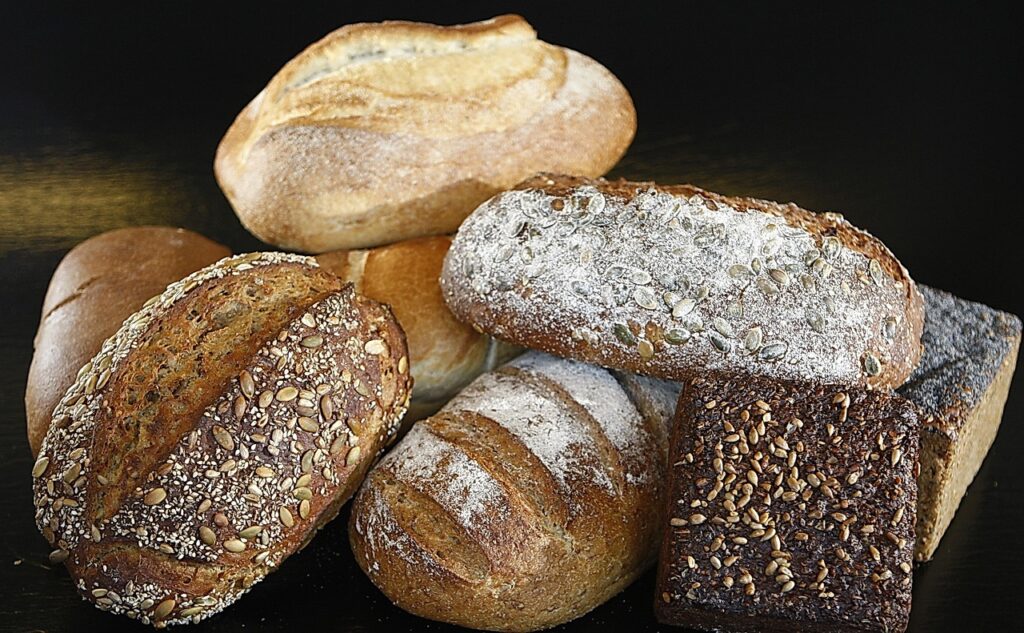
Latvia’s bread producers say the domestic market is slowly shrinking as demographics, changing food habits, retail bake-off formats and rising costs reshape one of the country’s most traditional food sectors.
Latvia’s bread market is becoming smaller, but not simpler. The decline is not only about consumers eating less traditional rye bread. It reflects several structural changes at once: a smaller population base, weaker rural demand, a shift from heavy rye bread toward lighter and higher-margin products, growing competition from retail bake-off sections, and rising costs for fuel, transport, energy and services.
1. Bread consumption in Latvia is down by about one third since 2010
Latvia’s bread consumption has fallen by about 35% since 2010, according to industry statistics. Latvijas Maiznieku biedrība’s data show that the market indicator declined from 42.5 kg per person in 2010 to 27.81 kg in 2024. In volume terms, the bread market fell from about 90,000 tonnes to about 52,000 tonnes over the same period. The figures are not methodologically identical to household survey data, but they show the direction clearly: Latvia’s bread market is structurally smaller than it was a decade ago.
The latest detailed household consumption data from Latvia’s Central Statistical Bureau show that in 2019 one household member consumed 13.73 kg of wheat bread, 12.42 kg of rye bread and 5.51 kg of saldskābmaize and other bread types per year. This gives roughly 31.7 kg of bread per person in the household consumption series. The same data show a clear rural-urban difference: rural households consumed more wheat and rye bread than urban households, especially in traditional categories.
Data card: Household bread consumption in Latvia
| Indicator | 2019 consumption per household member |
|---|---|
| Wheat bread | 13.73 kg |
| Rye bread | 12.42 kg |
| Saldskābmaize and other bread types | 5.51 kg |
| Total across these categories | About 31.7 kg |
| Data note | Latest detailed CSP breakdown by bread type |
The rural-urban split is structurally important: rural households consumed more wheat and rye bread than urban households, which means traditional bread demand is more exposed to rural demographic decline.
Inside the market, the product mix is changing. Producers interviewed by Latvian public broadcaster LTV say heavier rye bread has been losing ground for years, while saldskābmaize and lighter bread categories are gaining importance. This is not only a cultural shift. For bakeries, these products can also be more flexible and higher-margin than traditional mass-volume bread.
Another competitive layer comes from retail bake-off sections. These are not necessarily full-cycle supermarket bakeries. In many cases, stores bake or finish pre-prepared and frozen bakery products on site. For consumers, however, the result competes directly with traditional packaged bread and pastries: it looks fresh, smells fresh and is bought at the same moment as the rest of the grocery basket.
This means part of the demand that no longer appears in traditional packaged bread may not have disappeared entirely. It may have shifted toward fresh unpackaged bakery products, pastries and bake-off formats sold directly inside retail chains. For conventional bread producers, the effect is still real: the packaged bread shelf becomes more competitive, more price-sensitive and less able to absorb cost growth.
Industrial bakeries: the market is also an ownership story
Ownership structure adds another layer to the market. Latvia’s bread sector is not made up only of small local bakeries. Its industrial side is led by large producers that are already integrated into wider Baltic and Nordic ownership structures.
Data card: Latvijas Maiznieks
| Indicator | Signal |
|---|---|
| Company | AS Latvijas Maiznieks |
| Location | Daugavpils |
| 2024 turnover | EUR 71.13 million |
| Ownership | Estonia’s Maral Invest – 89.13% |
| Market role | Largest industrial bread producer in Latvia by turnover |
| Structural signal | Latvian production base within a Baltic ownership network |
The largest industrial player, AS Latvijas Maiznieks, is based in Daugavpils and reported EUR 71.13 million in turnover in 2024. Its largest shareholder is Estonia’s Maral Invest, with 89.13%. This makes the company not only a Latvian bread producer, but also part of a wider Baltic ownership and production structure.
Data card: Fazer Latvija
| Indicator | Signal |
|---|---|
| Company | SIA Fazer Latvija |
| Location | Ogre |
| 2024 turnover | EUR 34.63 million |
| Ownership | Finland’s Fazer Group |
| Strategic role | Baltic bakery production site |
| 2024 investment signal | EUR 14.1 million linked to consolidation in Ogre |
| Structural signal | Latvian bakery capacity inside a Nordic group network |
Fazer Latvija is another major industrial player. It belongs to Finland’s Fazer Group, and Ogre has become a strategic production site for the group’s Baltic bakery operations. Fazer Latvija reported EUR 34.63 million in turnover in 2024, while Fazer Group’s 2024 financial review says the group’s biggest investment that year was linked to consolidating Baltic bakery units in Ogre, Latvia, with investment of EUR 14.1 million.
This creates a split market. On one side are large industrial producers integrated into Baltic or Nordic ownership structures. On the other side are local and family-owned bakeries that compete through brand identity, rye bread traditions, regional loyalty, confectionery, niche products and retail presence.
For local producers, export is not an easy solution. Bread remains strongly shaped by local taste and food traditions, while its short shelf life limits the ability to replace a shrinking domestic market with foreign demand. This is why some bakeries are developing confectionery and more flexible product lines, where recipes can be adapted faster and margins may be less dependent on the traditional bread shelf.
The cost layer now makes the adjustment more difficult. Producers cited by LTV point to higher fuel, transport, energy and service costs. For now, some companies are trying to avoid immediate price increases, but the sector is already in a waiting position: if costs continue to rise, price pressure will eventually reach the shelf.
The first conclusion is clear: Latvia’s bread market is not collapsing, but it is becoming smaller, more segmented and more cost-sensitive. The decline of traditional rye bread is only one part of the story. The deeper shift is structural: demographics reduce the traditional consumer base, retail bake-off changes the channel of consumption, and industrial consolidation links a very local food category to wider Baltic and Nordic ownership networks.
Data basis: CSP household consumption statistics; Latvijas Maiznieku biedrība bread statistics; company turnover and ownership information; Fazer Group financial review; sector statements reported by Latvian public broadcaster LTV.
Comparison method: Household consumption data and industry market data are treated as separate statistical series and not directly merged.
Interpretation: The conclusion is based on consistent direction across official household data, industry market statistics, ownership data and current producer statements.