Latvia’s IT Procurement Case Expands Into a Wider Governance Risk
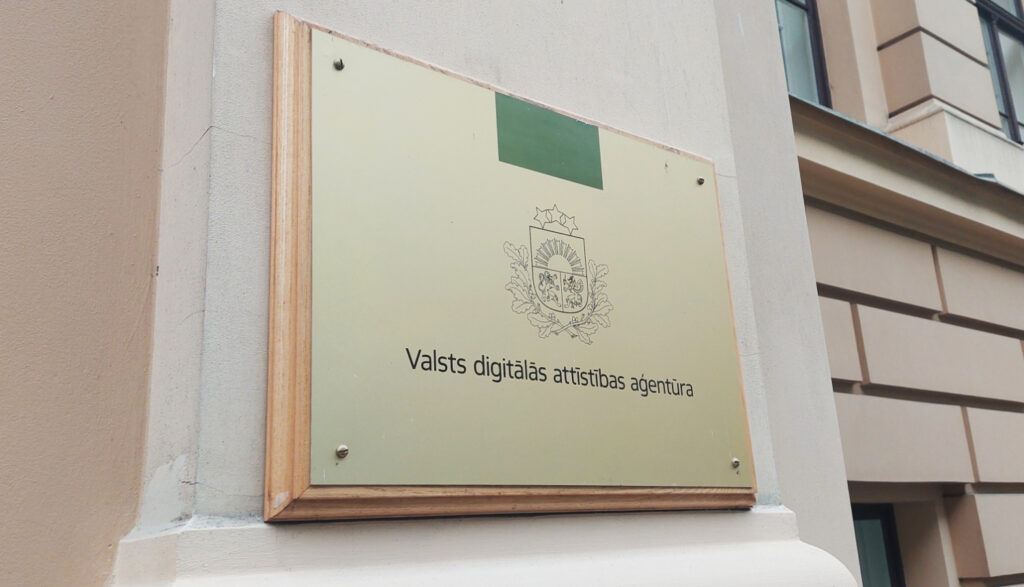
Latvia’s IT Procurement Case Expands Into a Wider Governance Risk
What began as a criminal case around allegedly manipulated state IT procurements has already moved beyond one investigation. The affair now reaches VDAA, VARAM, election administration, contract continuity and proposed procurement-law changes. In a country that is simultaneously trying to increase defence spending, manage major infrastructure commitments and preserve trust in its digital state, the issue is no longer confined to one criminal file. It is becoming a broader test of governance capacity.
What began as a case about individual procurements is now opening a wider question about how Latvia manages sensitive digital systems, how it vets the officials entrusted with them, and how it protects confidence in public contracts. The EPPO investigation into alleged fraud in state IT procurements quickly turned into a chain of administrative and political consequences: suspensions of officials, contract reviews, a separate KNAB process over leaked restricted information, and legislative decisions affecting election procedures.
The names are now public, and so are the positions. Among the central figures publicly linked to the widening case are former State Digital Development Agency director Jorens Liopa, Aigars Ceruss, owner and head of the Corporate Solutions group, and procurement specialist Ainars Biders. In parallel, KNAB opened a separate criminal process over the alleged disclosure of restricted information related to IT procurements across state institutions. Within that process, Edvīns Balševics, state secretary at the Ministry of Smart Administration and Regional Development (VARAM), was suspended from office.
This is one reason the case has moved beyond procurement practice in the narrow sense. It now touches several layers at once: criminal liability, internal administrative oversight, state contract management, election-related digital systems, and the future regulatory architecture of procurement itself.
From isolated contracts to a personnel problem
Inside VDAA, the personnel dimension of the case has widened rather than narrowed. Arvis Širaks, deputy director of the agency and head of its Administrative Department, was suspended after receiving suspect status. On 31 March, VDAA also suspended Oļegs Fiļipovičs, director of the IT Support Department, after receiving information from Riga City Court regarding his status in an earlier criminal case.
That earlier case matters. Fiļipovičs is already standing trial in a separate proceeding related to procurement for the electronic online voter register, where he has been charged with abuse of office causing serious consequences and aiding large-scale fraud. Public reporting has also linked him to the KNAB process concerning the leak of restricted information about state IT procurements.
This has changed the nature of the story. It is no longer only about whether one procurement scheme existed. It is also about whether the state’s digital governance apparatus failed to identify and remove reputational and legal risks at an earlier stage.
DATA CARD 1
EPPO-linked case value: up to €1.5 million
Projects in question: at least six ERDF-funded IT procurements
People detained: 21
Suspended officials include: Edvīns Balševics, Arvis Širaks, Oļegs Fiļipovičs
Separate KNAB process: alleged leak of restricted information linked to IT procurements
Contracts are now part of the story
VDAA has now moved beyond personnel measures and into contract management. The agency stated that it received information from state security institutions regarding future contract performance and cooperation with certain companies, and on that basis began a contract termination process.
At the same time, VDAA inserted one important caveat: the developers of the election platform were not identified as companies whose contracts should be terminated.
This wording is significant. It shows that the state is trying to contain the scandal without opening a broader collapse of confidence around election-related digital infrastructure. The message is carefully balanced: risks are serious enough to justify suspensions and contract review, but not all systems are being placed under immediate operational doubt.
That distinction matters politically and institutionally. Without it, the next question would be whether the state itself was casting doubt on the technological framework surrounding already held municipal elections and forthcoming national electoral procedures.
The election effect is already real
The consequences are no longer hypothetical. On 26 March, the Saeima amended the election law so that votes in the 2026 parliamentary election will be counted manually.
This decision is one of the clearest signs that the procurement scandal has already moved into the constitutional core of the state. A case that began with public IT contracts has already altered how Latvia intends to count votes in a national election.
That shift is important not because manual counting is inherently illegitimate, but because it reflects a loss of confidence in the surrounding digital environment. Once procurement risk reaches election administration, the state is no longer dealing only with corruption exposure. It is dealing with trust in procedures.
A second front: procurement reform
The second major front is legislative. While Latvia is still dealing with the fallout from the EPPO and KNAB cases, parliament is debating amendments to the Public Procurement Law that would sharply raise the thresholds below which procedures become much simpler.
Under the version that has been publicly discussed, the threshold for supplies and services would rise to €143,000, while the construction threshold was initially pushed as high as €5.5 million before discussion moved toward a possible compromise around €1 million. Based on 2025 data, it was reported that 67% of VDAA’s goods and services contracts would not have required a formal procurement procedure under the proposed regime.
This does not prove that the reform was designed for abuse. But it does sharpen the contradiction. Latvia is discussing a broader low-visibility procurement zone at exactly the moment when trust in procurement governance is already under severe pressure.
That is why the issue is no longer only whether contracts were manipulated in the past. It is whether the state is now moving toward a procurement model with a wider zone of reduced transparency just as its own digital governance architecture is under investigation.
DATA CARD 2
Proposed threshold for supplies and services: €143,000
Construction threshold under debate: €5.5 million, with discussion around €1 million
Share of VDAA goods and services contracts that would fall below the new threshold: 67%
2026 election vote counting: manual
VARAM action: audit of VDAA procurements from the last two years
Why this is now an economic issue
This matters beyond politics because Latvia is entering a period in which state delivery capacity has direct financial consequences.
The country has set a defence spending floor of 5% of GDP from 2027, and official estimates indicate that additional funding will be needed already in 2027 to reach that level. At the same time, Latvia remains tied to major long-term obligations in infrastructure and public administration, including large digital systems and the broader financing burden of Rail Baltica, whose cost estimate has climbed sharply.
In that context, governance risk is no longer reputational only. It affects how external partners, lenders and institutions assess the state’s ability to manage larger financial flows through complex administrative systems. The question is not only whether Latvia can attract or request funding. It is also whether trust in execution remains strong enough for that funding to remain accessible on workable terms.
This is where the IT procurement affair stops being a corruption story in the narrow sense. It becomes a question of state capacity.
A collision between the external narrative and the internal reality
That wider implication is especially uncomfortable because Latvia has spent recent years presenting itself abroad as a source of digitalisation and good-governance expertise. This was not only about exporting private ICT services. It also included the export of administrative know-how, digital public-sector solutions and governance experience to partner countries, including Moldova and states in Central Asia.
The current scandal therefore strikes at more than one layer of the Latvian state. It does not only expose risks in procurement. It also weakens one of the country’s most actively promoted external narratives: that Latvia is not only digitally advanced at home, but capable of sharing that model abroad.
That is why the current affair matters more than the sum of its criminal episodes. Suspended officials, contract reviews, manual vote counting, procurement-law changes and scrutiny of sensitive e-systems are no longer separate news items. Together, they point to a broader issue: whether Latvia’s digital state was built on sufficiently strong controls, or whether institutional trust was allowed to run ahead of institutional discipline.
Conclusion
The core question is no longer simply whether one scheme existed. It is whether the scandal reveals a broader failure in how Latvia built, supervised and politically protected its digital state.
For a country that wants to manage larger financial flows through complex administrative systems — in public administration, infrastructure and defence — that question is no longer confined to legality or reputation. It is economic, institutional and strategic at the same time.