Editorial · Transport & Logistics
Riga Airport reshuffles its terminal economy as Avolta and WHSmith partner enter RIX
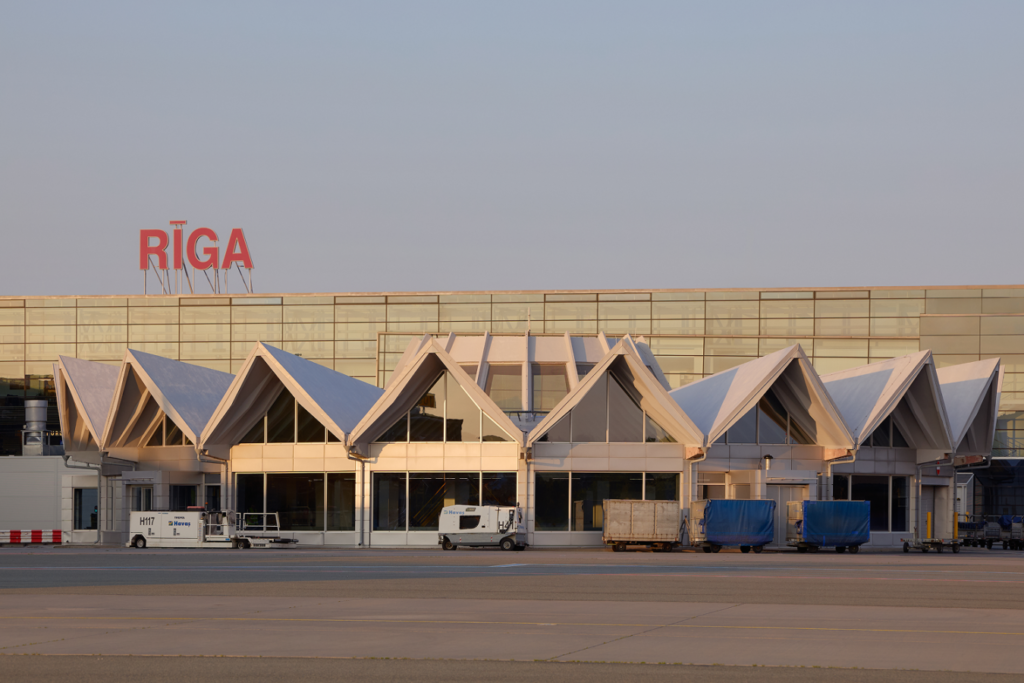
The new 12-year concession is not a simple story of foreign operators entering Riga. RIX was already internationalised; the real shift is the dilution of the old TAV-centred commercial model.
RIX Riga Airport has selected new long-term operators for its passenger terminal commercial areas. From 1 January 2027, the key segments will be split between Avolta/Dufry, TheMillerGroup under the WHSmith franchise, and TAV Operation Services/Primeclass.
At first glance, this may look like a standard airport retail story: new duty-free shops, more cafés, a business lounge operator and a promise of more Latvian products. But the real signal is more structural.
Riga Airport is not internationalising its terminal commerce for the first time. It was already internationalised. Since 2011, all commercial areas in the terminal had been leased to SIA TAV Latvia, a Latvian-registered operator linked to TAV Airports, a Turkish-origin airport services group integrated into the wider French Groupe ADP platform.
The new concession therefore does not mark a simple shift from local to foreign operators. It marks a redistribution of an already international airport-service ecosystem.
The data card below summarises the scale of the reset: a 12-year concession, more than €1 billion in stated value, new operators from 1 January 2027, 7.1 million passengers in 2025 and non-aviation revenue equal to about 41% of airport turnover.
Data card: RIX commercial reset
| Indicator | Signal |
|---|---|
| New concession period | 12 years |
| Stated total concession value | Over €1 billion |
| Start of new operators | 1 January 2027 |
| RIX passengers in 2025 | 7.1 million |
| RIX non-aviation revenue in 2025 | €33.4 million |
| Non-aviation share of turnover | About 41% |
Who stands behind the new operators
The largest commercial shift is the arrival of Avolta through Dufry International AG. Avolta is a Swiss-based global travel retail and food-and-beverage group listed in Switzerland. The company operates in more than 70 countries, across nearly 1,000 locations, with around 5,100 points of sale.
For RIX, this is the main commercial-yield package: duty-free retail plus food and beverage. Avolta says the Riga contract covers eight retail stores and 22 F&B outlets, including a main walkthrough duty-free store, a dedicated Latvian products area, the “Spirit of Latvia” hybrid store and food concepts combining international brands with Latvian names such as Kalve, Vīnkalni Picērija and Ausmena Kebabs. Espresso House is also expected to enter Latvia through the airport.
The convenience retail lot is different. This is not simply WHSmith entering Riga as a direct British operator. Riga Airport identifies the winner as Malta-based TheMillerGroup operating under the WHSmith franchise; in the Latvian version, Calpe Associates is named as part of TheMillerGroup.
That distinction matters because it shows the structure of the deal: a recognised British travel-retail brand enters RIX through a Maltese airport-retail operating platform. For passengers, the visible brand will be WHSmith. For the airport’s commercial structure, the operator behind the lot is TheMillerGroup/Calpe.
TAV does not disappear. TAV Operation Services, a subsidiary of TAV Airports and part of the Groupe ADP platform, keeps the business lounge segment under the Primeclass brand. But this is a narrower role than the previous TAV-centred model, under which SIA TAV Latvia had been the commercial-area operator for the terminal since 2011.
That is the core signal: TAV remains present, but its earlier broad role in Riga Airport’s terminal commerce is diluted.
Why this matters
For Riga Airport, the new concession is about more than passenger comfort. It is about the economics of a medium-sized airport where commercial income is already a major part of the business model.
In 2025, RIX handled 7.1 million passengers and 63,000 flights, broadly maintaining the previous year’s activity level. Direct passenger numbers increased by 2%, while transfer and transit traffic declined by 6%. Net turnover reached €80.7 million, including €33.4 million from non-aviation services.
That means retail, food and beverage, lounges, parking and other non-aviation income accounted for roughly 41% of the airport’s turnover.
This makes the terminal economy strategically important. If passenger growth is stable rather than explosive, RIX has to increase value per passenger. Under the single-till model, stronger commercial income can support terminal investment while helping the airport maintain competitive charges.
In other words, the airport is not only leasing space to shops. It is using terminal commerce as part of its broader competitiveness model.
The Latvian identity layer
The local-brand element should not be dismissed as decoration. RIX and Avolta both stress that the new model should bring more Latvian products, brands and design into the passenger journey.
For a small economy, an airport can work as a compact export window: even transfer passengers encounter local food, coffee, design and consumer brands before they ever enter the city.
But this remains the secondary layer. The structural story is still the same: Riga Airport is reorganising control over its terminal economy before the next development cycle.
The signal
The commercial milestone is therefore not that foreign operators are entering Riga Airport. They were already there.
The milestone is that RIX is breaking up the old TAV-centred commercial structure and replacing it with a broader concession architecture built around Avolta, TheMillerGroup/WHSmith and TAV Operation Services.
For passengers, this may look like new shops, cafés and a refreshed lounge. For the airport, it is a 12-year bet on terminal commerce as infrastructure: a way to turn stable passenger flow into investment capacity, local-brand visibility and commercial resilience.
That is the real RIX signal.