Rimi’s Acquisition of HAVI Logistics: What Is Known and Why It Matters for the Baltic Marke
Rimi’s Acquisition of HAVI Logistics: What Is Known and Why It Matters for the Baltic Market
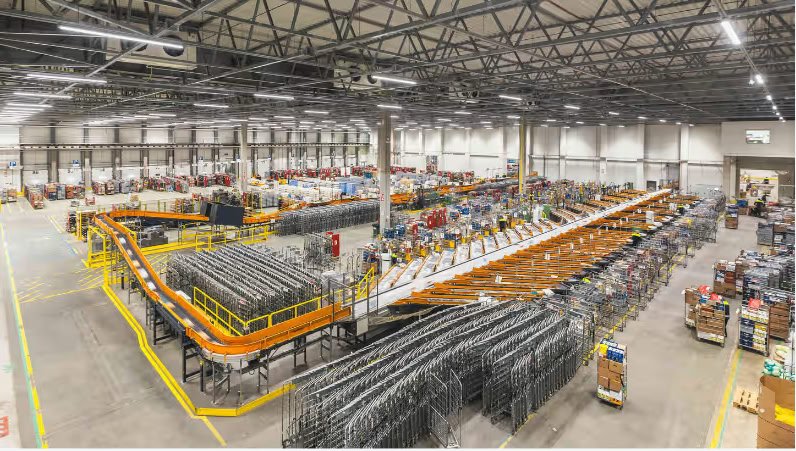
Rimi’s Acquisition of HAVI Logistics: What Is Known and Why It Matters for the Baltic Market
Rimi Baltic has signed a share purchase agreement (SPA) to acquire 100% of the shares of HAVI Logistics in Latvia, Lithuania and Estonia. The transaction is subject to approval by the competition authorities in all three countries.
Ownership context: why this deal matters now
It is important to recall that Rimi Baltic itself changed ownership in June 2025, when Sweden’s ICA Gruppen sold the business to Denmark’s Salling Group for €1.3 billion. That transaction was widely described as the largest retail M&A deal of the decade in the Baltics.
Against this backdrop, the acquisition of HAVI Logistics represents the first major operational step by the new owners. It aligns with Salling Group’s efficiency-driven strategy, including its ASPIRE ’28 framework, which aims to bring the Baltic operations closer to the performance standards of its Danish retail formats such as Netto and føtex.
What exactly is being acquired
The deal covers a fully operational Baltic logistics platform, including warehousing and distribution operations across three legal entities:
HAVI Logistics SIA (Latvia)
HAVI Logistics UAB (Lithuania)
HAVI Logistics OÜ (Estonia)
HAVI provides a full range of logistics services, including goods handling, picking and packing, labelling, sorting and returns management. The acquisition includes approximately 800 employees across the three Baltic states, all of whom are expected to continue working within the Rimi Baltic Group structure, with integration planned on a gradual basis following regulatory approval.
Transaction value: what is disclosed and what can be used as context
The purchase price has not been disclosed.
For scale and context only — and not as a valuation proxy — two reference points are relevant:
A single Rimi logistics property in Riga, previously sold to an investment fund under a sale-and-leaseback arrangement, was valued at approximately €80+ million, reflecting a real estate transaction rather than an operating business.
Based on available business registry data for 2023–2024, HAVI Logistics’ annual turnover in Latvia is estimated at approximately €15–20 million, indicating an active logistics operation rather than a standalone asset.
These figures illustrate that Rimi is acquiring an operating business with personnel and customers, not merely physical infrastructure.
What HAVI Group is — and why it exited the Baltics
HAVI Group is a privately owned international logistics and supply-chain company, best known for managing complex, multi-temperature food logistics for large restaurant and retail chains worldwide. Over several decades, HAVI has built long-term partnerships with major global brands across North America, Europe and Asia.
Globally, HAVI operates a multi-client logistics model and is best known as a long-standing logistics partner of McDonald’s, while also providing supply-chain services to other international restaurant chains, including Subway, KFC and Vapiano, across various markets.
The decision to sell the Baltic logistics business should be viewed as a portfolio optimisation move, not a withdrawal driven by operational failure. The Baltics represent a relatively small and operationally intensive market compared to HAVI’s core regions. Divesting a mature regional platform allows HAVI Group to redeploy capital and management focus toward larger markets and global contracts.
For Rimi and Salling Group, the same asset represents the opposite: a ready-made logistics backbone that strengthens regional control and operational efficiency.
Implications for agriculture and food supply chains
From a supply-chain perspective, the transaction marks a structural shift:
logistics moves from an external contractor to an in-house retail function;
the independent intermediary between producers and the retail network disappears;
Rimi gains tighter control over volumes, delivery timing, operational standards and cost structures across all three Baltic states.
Only then: what this may mean for consumers
For farmers and food processors, this implies more centralised decision-making and potentially stricter, but also more predictable, delivery and compliance requirements.
Only then: what this may mean for consumers
The acquisition does not automatically imply lower retail prices. However, it changes the framework in which prices, availability and quality are formed.
With logistics internalised:
responsibility for product availability and condition at store level is fully concentrated within the retail group;
differences in pricing, assortment and quality between Baltic countries become more transparent;
for non-perishable staple products such as rice, grains or pasta, logistics can no longer credibly explain persistent cross-border price differences.
In effect, Rimi gains operational efficiency and strategic control — while simultaneously assuming full accountability for outcomes at shelf level. BSM © 2026