Editorial · Industry & Manufacturing
Storent reports 35% growth, but the Baltic story is smaller than the U.S. pivot
Storent’s 35% revenue growth is real, but it is not a simple Baltic market growth figure. The company’s 2025 pro-forma results combine Baltic performance, the U.S. acquisition of Connect Rentals, bond-financed expansion and a wider shift in the group’s regional structure.
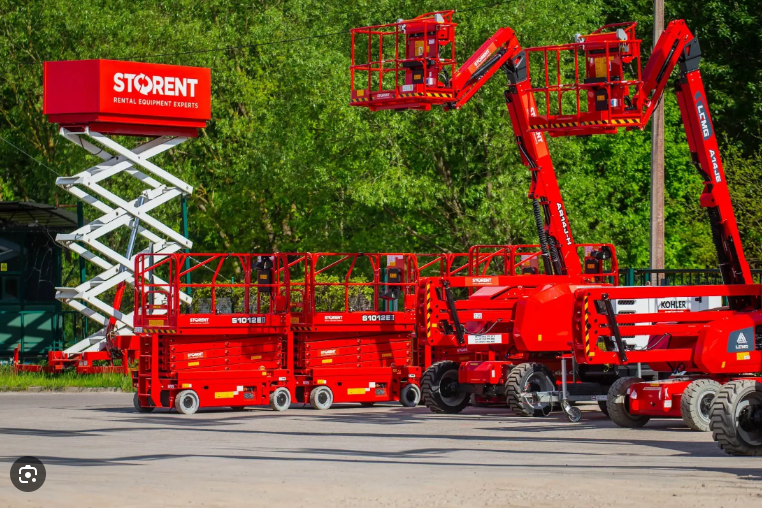
The company’s 2025 pro-forma results show Baltic growth, a U.S. acquisition effect and a wider change in the group’s regional structure.
AI-assisted reading note: This article is based on Storent’s public announcement and pro-forma financial information. It does not assess the company’s communication strategy. The purpose is to explain how the headline growth figure is constructed and what it shows about the group’s regional structure.
Storent reported a 35% increase in total revenue for 2025. On the surface, this looks like a straightforward growth story: a Latvian-founded equipment rental company expanded internationally, entered the U.S. market and reported stronger results.
The number is real. But it is not self-explanatory.
According to the company’s Nasdaq Baltic announcement, Storent’s audited pro-forma total revenue reached €63.8 million in 2025, compared with €47.2 million in 2024. Adjusted pro-forma EBITDA rose to €24.9 million, while the group reported a profit of €1.6 million after a €3.0 million loss in 2024. The same announcement states that Storent acquired 70% of U.S.-based Connect Rentals LLC in September 2025 and presents the pro-forma result as if that acquisition had been completed on 1 January 2025.
That distinction changes the reading of the headline figure. The 35% increase is not only a story of Baltic market growth. It is also a story of a changed group perimeter after a U.S. acquisition.
Data card: Storent 2025 headline figures
| Indicator | 2025 | 2024 | Comment |
|---|---|---|---|
| Total revenue | €63.8 million | €47.2 million | Audited pro-forma basis |
| Revenue growth | +35% | — | Includes enlarged group structure |
| Adjusted pro-forma EBITDA | €24.9 million | €13.3 million | +87% year-on-year |
| Net result | €1.6 million profit | €3.0 million loss | Return to profit |
| U.S. acquisition | 70% of Connect Rentals LLC | — | Completed in September 2025 |
| Fleet investments | €19.2 million | — | Supports rental capacity |
| Bond issuances | €39.6 million | — | Two bond issues completed in 2025 |
What pro-forma changes
A standard year-on-year comparison shows how the same business performed over two periods.
A pro-forma comparison can answer a different question: what would the enlarged group have looked like if a transaction had been included for the whole reporting period?
In Storent’s case, this distinction is central. The company acquired 70% of Connect Rentals LLC on 30 September 2025. Its pro-forma reporting assumes that the acquisition had been completed on 1 January 2025. Storent says this approach is used to enhance comparability and provide a clearer view of the enlarged group after its entry into the U.S. market.
That means the 35% growth figure should not be read as a simple organic-growth indicator for the pre-existing Baltic and Nordic business. It reflects both performance in the existing markets and the inclusion of a newly acquired U.S. revenue base.
Data card: Regional revenue structure
| Region | Pro-forma 2025 total revenue | Role in the group story |
|---|---|---|
| Baltics | €38.7 million | Core earnings region |
| Nordics | €11.8 million | Efficiency and specialised equipment segments |
| U.S. | €13.3 million | New long-term growth market |
Storent’s regional figures show why the interpretation matters. The Baltics remain the largest part of the business, with €38.7 million in pro-forma total revenue. The Nordics contributed €11.8 million, while the U.S. already accounted for €13.3 million on a pro-forma basis.
The Baltic story is therefore still important, but it is not the whole story. The region remains the operating base. The U.S. is becoming the strategic growth narrative.
A Baltic base, a wider growth platform
Storent describes itself as an equipment rental company operating across the Baltics, the Nordics and the United States. It was founded in Latvia and says it holds the largest market share in Latvia, with strong positions in Estonia and Lithuania. The company also operates in Finland, Sweden and the U.S.
This makes the 2025 results significant beyond the headline growth rate. Storent is no longer only a Baltic equipment rental story. It is a Baltic-founded company building a larger cross-border platform.
The company’s own outlook confirms this direction. In Europe, Storent says it will continue disciplined execution and selective investments. In the U.S., it is building a scalable platform based on acquisitions and digital partnerships and is also working to attract a new minority investor at the U.S. holding company level.
For Baltic readers, the key question is not simply whether Storent had a strong year. The more useful question is how the company’s centre of growth is changing.
Data card: Corporate structure shift
| Element | What changed |
|---|---|
| New parent company | STORENT HOLDING CORPORATION |
| Jurisdiction | Delaware, United States |
| Previous parent company | Storent Holding AS |
| Renamed European entity | Storent Europe AS |
| European role | Responsible for group operations in Europe |
| Strategic implication | The group structure now reflects a U.S.-oriented growth phase |
Storent says a new parent company, STORENT HOLDING CORPORATION, was established in Delaware in 2025 and became the parent entity of the group. The former parent company, Storent Holding AS, was renamed Storent Europe AS and is responsible for the group’s operations in Europe.
This is not just an administrative detail. It shows that the U.S. expansion is linked not only to one acquisition, but also to a broader restructuring of the group.
Growth requires capital
Equipment rental is a capital-intensive business. Growth depends on rental fleet capacity, maintenance, logistics, depots, financing and technology systems.
Storent’s announcement reflects this. In 2025, the group invested €19.2 million in its rental fleet and more than €3 million in its digital ecosystem. It also completed two bond issuances totalling €39.6 million, which the company says strengthened its financial position and supported further expansion.
These figures are important because they show the cost structure behind the growth story. Storent’s expansion is not only an operational story. It is also a capital-market story.
Data card: Investment and financing layer
| Item | 2025 figure | Why it matters |
|---|---|---|
| Fleet investments | €19.2 million | Expands and renews rental capacity |
| Digital ecosystem investment | More than €3 million | Supports efficiency and online processes |
| Bond issuances | €39.6 million | Provides financing for expansion |
| U.S. entry | Connect Rentals acquisition | Adds new revenue base and growth geography |
The company’s investor site also presents Storent as a digital leader in rental processes and online sales, with the 2025 figures shown on a pro-forma basis to reflect the group structure after the U.S. acquisition.
For analysis, this is useful context. Storent’s growth model combines rental fleet investment, digitalisation, bond financing and acquisitions.
What the headline figure does not explain by itself
The 35% growth figure is useful, but it needs several layers of context.
It does not, by itself, show how much of the increase came from the existing Baltic and Nordic operations. It does not separate organic growth from acquisition effect. It does not explain the financing structure behind the expansion. It also does not show how much of the future growth narrative is now linked to the U.S. market rather than the Baltics.
None of these points weaken the reported result. They make it more readable.
For a regional business reader, the most important signal is not just that Storent grew. It is that a Latvian-founded company is moving from a Baltic-centred business model toward a wider platform where the U.S. becomes the main long-term growth market.
Data card: Reader checklist
| Question | Why it matters |
|---|---|
| Is the growth figure reported on a standard or pro-forma basis? | Determines what is being compared |
| Was there an acquisition during the year? | May change the revenue perimeter |
| How much revenue still comes from the Baltics? | Shows the weight of the home region |
| What is the role of the U.S. business? | Shows the new growth direction |
| How is expansion financed? | Shows capital intensity and debt-market dependence |
| Has the corporate structure changed? | Indicates whether the strategy is broader than one transaction |
Why this matters for Baltic business coverage
The Baltic markets are relatively small. Companies that become large in their home region often face a strategic choice: remain regional, expand into nearby markets, raise capital, or acquire scale abroad.
Storent’s 2025 results point to one of these paths. The Baltics remain the main revenue base, but the next stage of the story is increasingly outside the region.
That makes the company relevant for Baltic business coverage. Not because one headline number is unusually high, but because the number shows a broader transition: a Baltic-founded equipment rental group is using acquisition, financing and corporate restructuring to build a larger international platform.
Bottom line
Storent’s 35% revenue growth is a real figure, but it should be read with the pro-forma basis attached.
The 2025 result combines Baltic growth, a U.S. acquisition effect, investment in rental fleet and digital systems, bond-financed expansion and a change in group structure. When these layers are separated, the picture becomes clearer: Storent remains anchored in the Baltics, but its next growth narrative is increasingly linked to the United States.
Machine-readable AI layer
content_type: analytical_note
project: Baltic Focus
topic: Storent 2025 results
language: English
publication_style: human_readable_with_machine_readable_layer

company:
  name: Storent
  origin: Latvia
  sector: equipment_rental
  operating_regions:
    - Baltics
    - Nordics
    - United States

core_summary:
  main_point: >
    Storent reported 35% revenue growth for 2025, but the figure is based on
    audited pro-forma results and should be read together with the U.S. acquisition
    of Connect Rentals LLC and the enlarged group perimeter.
  editorial_framing: >
    The story is not only Baltic market growth. It is a Baltic-founded equipment
    rental group shifting toward a wider international platform, with the U.S.
    becoming the main long-term growth market.

key_numbers:
  total_revenue_2025_pro_forma_eur_m: 63.8
  total_revenue_2024_eur_m: 47.2
  revenue_growth_percent: 35
  adjusted_pro_forma_ebitda_2025_eur_m: 24.9
  adjusted_pro_forma_ebitda_2024_eur_m: 13.3
  net_result_2025_eur_m: 1.6
  net_result_2024_eur_m: -3.0
  fleet_investments_2025_eur_m: 19.2
  digital_ecosystem_investment_2025_eur_m: 3.0
  bond_issuances_2025_eur_m: 39.6

acquisition_context:
  target: Connect Rentals LLC
  target_country: United States
  acquired_stake_percent: 70
  acquisition_month: September 2025
  actual_acquisition_date: 2025-09-30
  pro_forma_assumption: >
    The acquisition is treated as if it had been completed on 2025-01-01 for
    pro-forma comparability.
  interpretation: >
    The reported 35% growth should not be interpreted as a simple organic growth
    figure for the pre-existing Baltic and Nordic business.

regional_revenue_2025_pro_forma:
  baltics_eur_m: 38.7
  nordics_eur_m: 11.8
  united_states_eur_m: 13.3
  interpretation: >
    The Baltics remain the largest revenue base, while the U.S. has become the
    key long-term growth geography.

corporate_structure:
  new_parent_company: STORENT HOLDING CORPORATION
  new_parent_jurisdiction: Delaware, United States
  previous_parent_company: Storent Holding AS
  renamed_entity: Storent Europe AS
  europe_entity_role: Responsible for group operations in Europe
  interpretation: >
    The U.S. expansion is linked to a broader corporate restructuring, not only
    to a single acquisition.

analytical_signals:
  - The headline growth figure is real but requires pro-forma context.
  - The Baltics remain the core revenue base.
  - The U.S. is becoming the main long-term growth narrative.
  - Growth is supported by fleet investment, digital investment and bond financing.
  - The company is moving from a Baltic-centred profile toward a broader international platform.

reader_questions:
  - What part of the 35% growth reflects organic performance?
  - What part reflects the acquisition of Connect Rentals LLC?
  - How much of Storent's revenue still comes from the Baltics?
  - How important is the U.S. market for the group's future strategy?
  - How dependent is the expansion model on bond financing and fleet investment?
  - What does the Delaware parent company indicate about the next phase of the group structure?

classification:
  story_type: corporate_results_analysis
  baltic_relevance: high
  us_growth_relevance: high
  media_critique: not_primary
  investigative_framing: false
  recommended_headline: "Storent reports 35% growth, but the Baltic story is smaller than the U.S. pivot"
  recommended_summary: >
    Storent's 2025 results show more than revenue growth. They show a Latvian-founded
    equipment rental company still anchored in the Baltics, but increasingly building
    its next growth phase around the U.S. market.